

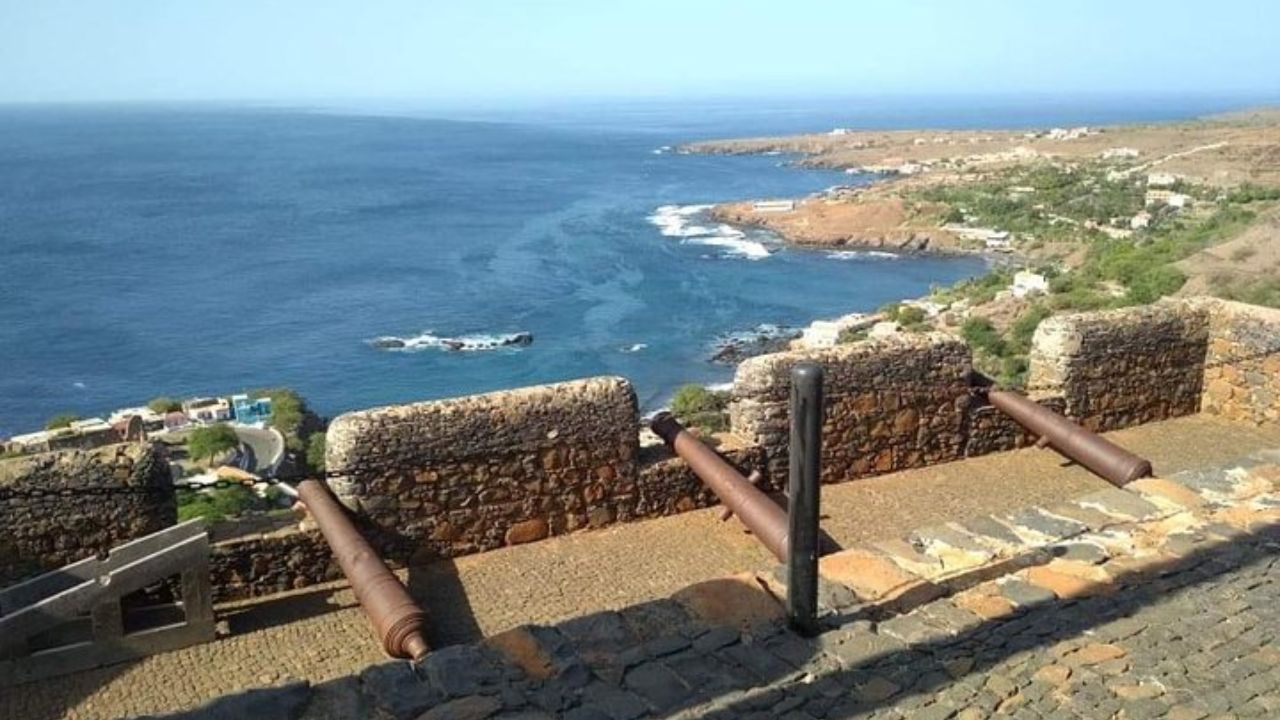
Cape Verde occupies a unique place in Atlantic history. Unlike many island groups in Africa, the Americas, or Asia, Cape Verde had no indigenous population before Europeans arrived in the 15th century. When Portuguese explorers reached the islands, they found no settlements, no agriculture, and no permanent human presence. This raises an important historical question: why was Cape Verde uninhabited before European arrival, despite being relatively close to the West African coast?
The answer lies in geography, climate, navigation patterns, and the realities of pre-modern seafaring.
Table of Contents
Geographic Isolation in the Atlantic
Cape Verde is located around 500–600 kilometers off the coast of West Africa, deep in the Atlantic Ocean. While this distance may seem manageable today, it posed a major barrier in ancient and medieval times.
Before the development of advanced sailing technology, most African coastal societies traveled along shorelines rather than venturing far into open ocean. Cape Verde is not visible from the mainland, meaning there were no visual cues to guide accidental discovery. Without instruments for open-sea navigation, reaching the islands intentionally would have been extremely difficult.
This isolation alone significantly reduced the chance of early settlement.
Lack of Evidence of Prehistoric Seafaring Routes
Many islands around the world were settled because they lay along established migration or trade routes. This was not the case for Cape Verde.
West African societies historically focused on:
- River systems like the Senegal and Niger
- Trans-Saharan trade routes
- Coastal fishing and short-range maritime activity
There is no archaeological or historical evidence that pre-European West African cultures practiced long-distance oceanic navigation comparable to Polynesian or Mediterranean sailors. Without regular voyages into the open Atlantic, Cape Verde remained outside known travel corridors.
Harsh Natural Conditions
Even if early sailors had reached Cape Verde, the islands may not have encouraged permanent settlement.
The archipelago is characterized by:
- Limited freshwater resources
- Irregular rainfall
- Volcanic and rocky terrain on several islands
- Frequent drought conditions
Unlike river-rich or forested regions, Cape Verde offered few immediate survival advantages. Sustaining agriculture without established water systems would have been difficult, especially for early societies without advanced irrigation methods.
For pre-modern settlers, islands with reliable freshwater and fertile soil were far more attractive than dry, wind-exposed volcanic landscapes.
Absence of Natural Animal and Plant Resources
Another reason Cape Verde remained uninhabited was the lack of easily domesticated plants and animals.
Before human arrival, the islands had:
- No large land mammals
- Limited edible plant species
- Sparse vegetation on many islands
Early settlers typically relied on familiar crops and animals to survive. Transporting these across open ocean without stable maritime systems would have been impractical. Without native resources to support immediate subsistence, settlement risk increased significantly.
Portuguese Maritime Expansion Changed Everything
Cape Verde’s uninhabited status ended in the mid-15th century with Portuguese exploration. By this time, European sailors possessed:
- Ocean-worthy ships
- Navigational tools like the astrolabe
- Knowledge of Atlantic wind and current systems
The Portuguese were actively exploring the Atlantic as part of broader trade and imperial ambitions. Cape Verde’s position made it strategically valuable, especially for maritime trade routes linking Europe, Africa, and later the Americas.
The first recorded European landing occurred around 1456, and permanent settlement began shortly after, starting with Santiago Island.
Strategic Value Over Natural Appeal
Importantly, Cape Verde was not settled because it was naturally ideal for habitation. It was settled because of its strategic location.
The islands became:
- A resupply point for ships
- A center for Atlantic trade
- A key hub in early transatlantic networks
Enslaved Africans were brought to the islands, fundamentally shaping Cape Verde’s population, culture, and history. Unlike regions with indigenous populations, Cape Verde’s society developed entirely from migration, forced movement, and cultural blending after European arrival.
Why No Indigenous Population Emerged Later
Some islands worldwide were discovered late but still developed indigenous cultures over time. Cape Verde did not follow this pattern because European settlement occurred quickly after discovery.
There was no long period between discovery and colonization during which an isolated population could emerge. The islands transitioned almost immediately into a colonial society connected to global trade systems.
As a result, Cape Verde became one of the few places in the world where all human history begins with recorded colonization.
Conclusion
Cape Verde was uninhabited before European arrival due to a combination of geographic isolation, limited pre-modern seafaring routes, harsh environmental conditions, and lack of natural resources for early settlement. Its distance from the mainland and absence from ancient trade networks kept it beyond the reach of earlier civilizations.
When Europeans finally arrived, advanced maritime technology transformed Cape Verde from an empty archipelago into a critical Atlantic crossroads. This unique beginning continues to shape Cape Verde’s identity, culture, and historical narrative today.

Joao Fernandes is a climatologist and historian specializing in Cape Verde’s weather patterns and island history, with fifteen years at the national meteorological institute and university research. Based in Praia, Cape Verde, his professional background blends climate analysis, historical archival research, and public policy advising. His expertise covers seasonal wind and rainfall forecasts, climate resilience for coastal communities, and archival studies of colonial-era records. Joao co-authored the book “Climate and Culture of Cape Verde,” published peer-reviewed papers, and advised municipal planners on weather-informed heritage conservation.