

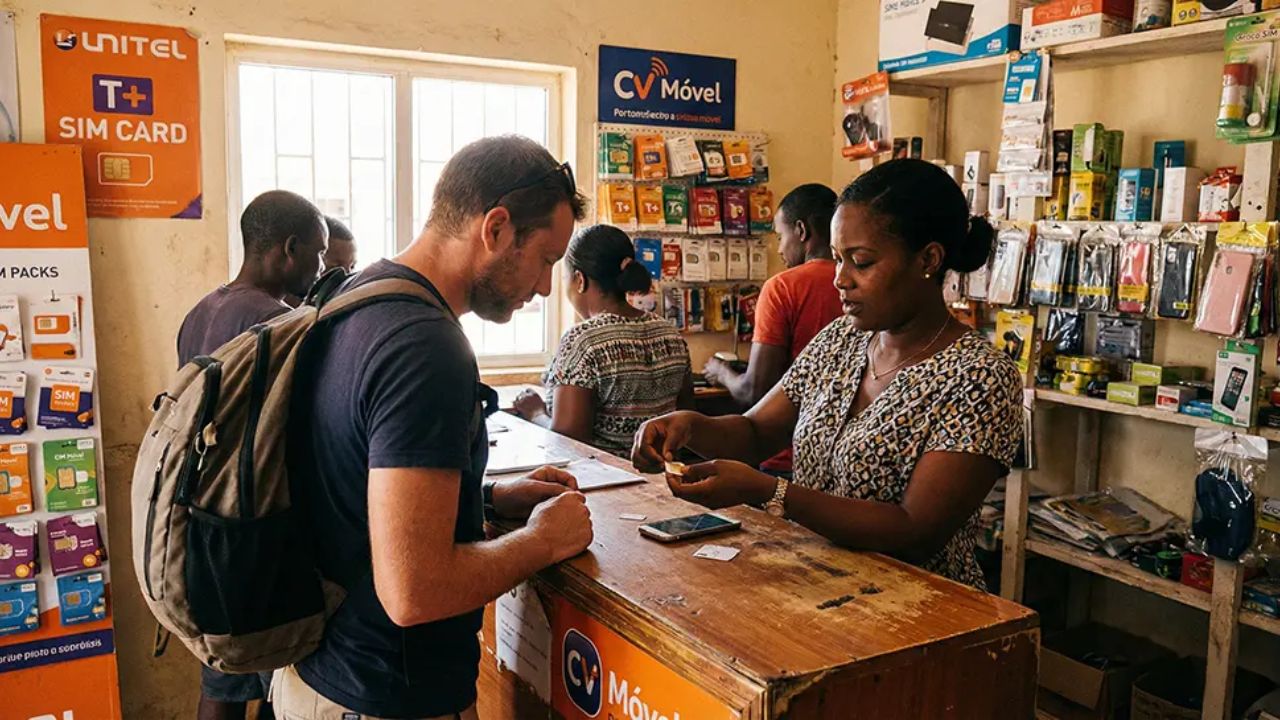
Staying connected in Cape Verde is easier than many first-time visitors expect. Whether you’re island-hopping between Sal and Santiago, hiking in Santo Antão, or relaxing on Boa Vista’s beaches, having a local SIM card makes navigation, transport coordination, and communication much smoother.
This guide explains where to buy a SIM card, how much it costs, which network to choose, and what kind of coverage you can realistically expect across the islands.
Table of Contents
Why You Should Get a Local SIM Card
International roaming from the U.S. or Europe can be expensive in Cape Verde. Many travelers are surprised by high roaming charges, especially for data. A local SIM card offers:
- Affordable data packages
- Local calling for taxis, guesthouses, and tour operators
- Better reliability than roaming connections
- Easy access to maps and transport updates
If you plan to explore multiple islands or travel independently, a local SIM card is highly recommended.
Mobile Networks in Cape Verde
Cape Verde has two main mobile network providers:
- CV Movel
- Unitel T+
Both operate across the archipelago and offer prepaid tourist-friendly packages. Coverage is generally strong in cities and major tourist areas such as Sal, Boa Vista, Praia (Santiago), and Mindelo (São Vicente).
In remote mountain areas like Santo Antão’s interior or sparsely populated coastal zones, signal strength may vary. However, for typical travel routes, connectivity is reliable.
Where to Buy a SIM Card
You can purchase a SIM card at:
- Airport kiosks (Sal and Praia airports are the most common)
- Official mobile operator stores in city centers
- Some local electronics or convenience shops
Buying at the airport is convenient but may cost slightly more than purchasing in town. If you’re arriving late at night, airport options may be limited, so plan accordingly.
Documents Required
To buy a SIM card in Cape Verde, you will need:
- A valid passport
- Basic registration details
SIM cards are registered for security reasons, so anonymous purchases are not permitted. The process is usually quick and takes only a few minutes.
SIM Card Prices and Data Packages
Prices can vary slightly by island and provider, but typical prepaid SIM card costs are affordable.
You can expect:
- SIM card price: around €5 to €10
- Data packages: starting from small daily bundles to larger weekly or monthly plans
A standard tourist data plan often includes several gigabytes of data, which is enough for navigation, messaging apps, light browsing, and social media use during a short stay.
It’s best to ask staff to explain available packages clearly. Many employees in tourist areas speak English or Portuguese, and sometimes basic French.
Internet Speed and Reliability
Cape Verde’s internet speed is generally good in urban and tourist zones. 4G service is available in major towns and beach areas. Streaming, video calls, and social media browsing usually work well where signal is strong.
However, expect slower speeds:
- In rural mountain villages
- During peak usage hours
- On smaller or less populated islands
For most travelers, performance is sufficient for everyday needs like Google Maps, WhatsApp, ride coordination, and checking ferry schedules.
eSIM Availability
At the moment, local operators may not consistently offer direct eSIM options for short-term tourists. If your phone supports eSIM, you can check with international travel eSIM providers before your trip. These may be convenient but often cost more than buying a local physical SIM.
If you prefer maximum value, a physical prepaid SIM purchased locally remains the most budget-friendly option.
Using Wi-Fi in Cape Verde
Many hotels, guesthouses, and cafés provide free Wi-Fi. Quality varies depending on the island and property. Resort hotels in Sal and Boa Vista typically offer stable connections, while smaller guesthouses may have slower speeds.
Public Wi-Fi is limited, so relying solely on free connections is not ideal if you need consistent access.
Tips Before You Buy
To avoid inconvenience, keep these points in mind:
- Make sure your phone is unlocked before traveling
- Bring a SIM ejector tool or small pin
- Ask staff to activate and test the SIM before leaving the store
- Confirm data balance and validity period
Also, check your data usage settings to avoid running out of credit unexpectedly.
Is It Worth Getting a Local SIM?
For most visitors, the answer is yes. A Cape Verde SIM card provides convenience, safety, and flexibility. It allows you to:
- Book last-minute taxis or tours
- Stay in touch with accommodation hosts
- Access updated weather forecasts
- Navigate inter-island travel
If you’re staying at a single resort and don’t plan to leave the property often, you might manage with hotel Wi-Fi. But for independent travelers exploring multiple islands, a local SIM card is a practical investment.
Final Thoughts
Cape Verde may feel remote on the map, but staying connected across the islands is straightforward. With two reliable providers, affordable prepaid plans, and easy registration, buying a local SIM card is a simple step that improves your overall travel experience.
Before departure, ensure your phone is unlocked, carry your passport, and plan to purchase a SIM either at the airport or in town shortly after arrival. With connectivity sorted, you can focus on enjoying Cape Verde’s beaches, culture, and island adventures without worrying about roaming costs or weak signals.

Marta Silva is a travel writer and certified island guide with over twelve years leading small-group tours across Cape Verde. Based in Praia, Cape Verde, her professional background combines on-the-ground guiding, itinerary planning, and hospitality consulting. Her expertise includes island itineraries, public transport logistics, sustainable travel tips, and local culture immersion. Marta authored the practical guidebook “Discovering Santiago” and contributes island guides for regional tourism publications; she has partnered with Cape Verde’s tourism board on community-based tourism initiatives and regular travel-workshops for visiting journalists.