

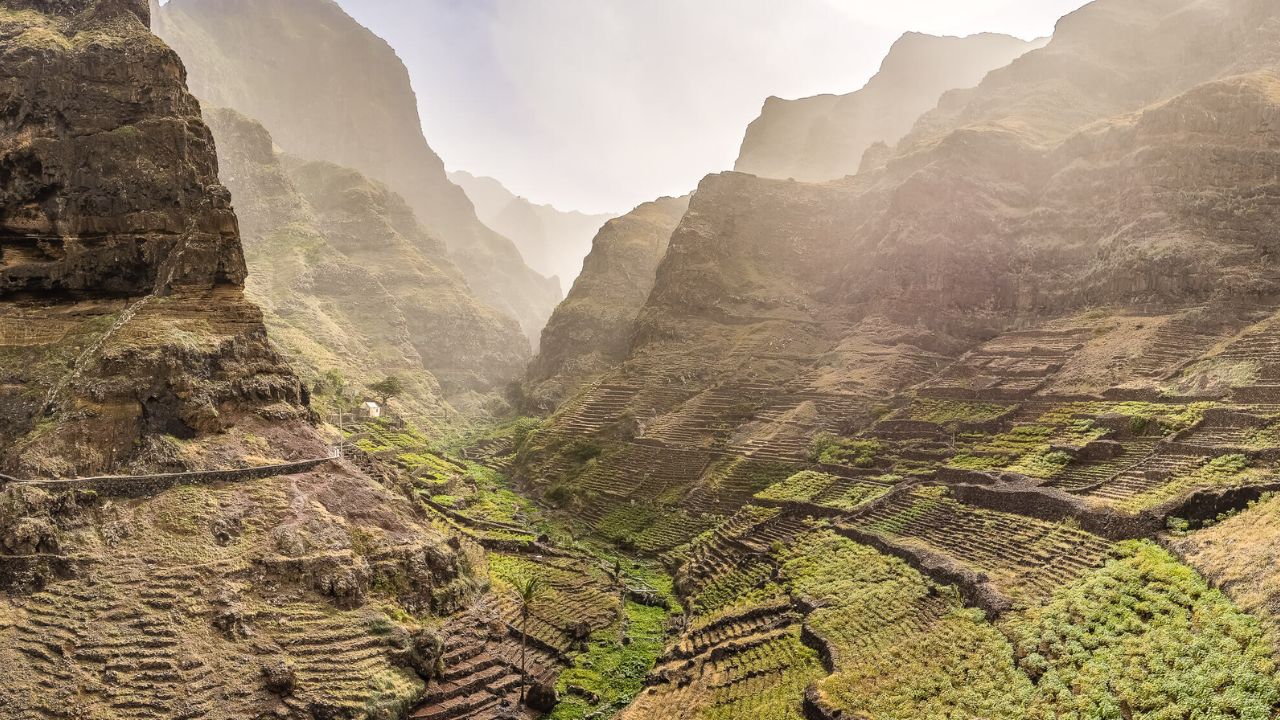
Santo Antão is widely regarded as the most dramatic and nature-rich island in Cape Verde. Located at the northwestern edge of the archipelago, it is defined by steep mountains, deep green valleys, and rugged coastal cliffs that feel far removed from the resort landscapes of Sal or Boa Vista. This island attracts travelers who value scenery, hiking, and everyday village life over beaches and nightlife.
Accessible by ferry from São Vicente, Santo Antão rewards visitors with some of the best walking routes and viewpoints in West Africa. It is an island best explored slowly, on foot, and with an appreciation for local rhythms.
Table of Contents
Where Santo Antão Is and How to Get There
Santo Antão does not have an international airport. Most visitors arrive via São Vicente, landing in Mindelo and then taking a ferry to Porto Novo. The crossing typically takes under an hour, but ocean conditions can be rough at times, especially during windy months.
From Porto Novo, a dramatic mountain road climbs into the island’s interior, revealing terraced slopes, volcanic ridges, and sudden green valleys. Many travelers consider this drive one of the most scenic experiences in Cape Verde.
Why Santo Antão Is Famous for Hiking
Santo Antão is the hiking capital of Cape Verde. Its geography creates natural walking paths that connect remote villages, farmland, and coastal viewpoints. Unlike heavily marked European trails, many routes here follow historic footpaths still used by locals.
Hikes range from easy village walks to demanding mountain crossings. The cooler temperatures at higher elevations make walking comfortable for most of the year, especially compared to the hotter eastern islands.
Famous Hiking Trails on Santo Antão
The most well-known trail is the walk from Cova crater down into Paul Valley. Starting at a volcanic crater high in the mountains, the path descends through sugarcane fields, banana groves, and small settlements. The contrast between the dry upper slopes and lush valley below is striking.
Another popular route connects Ponta do Sol to Cruzinha along the coast. This trail offers dramatic ocean views, cliffside paths, and glimpses of isolated fishing villages. It is physically demanding in parts but consistently rewarding.
Ribeira da Torre and Ribeira Grande valleys offer gentler walks with constant greenery, irrigation channels, and shaded sections, making them suitable for longer, relaxed hikes.
Villages and Local Life
Santo Antão’s villages are central to its charm. Places like Paul, Ribeira Grande, and Ponta do Sol provide insight into traditional island life. Homes are often built into steep slopes, surrounded by terraced fields that have been farmed for generations.
Agriculture remains a key part of daily life. Sugarcane, coffee, papaya, and beans are grown on small plots, and many families still produce grogue, the island’s traditional sugarcane spirit. Travelers walking through villages are often greeted with curiosity and warmth rather than crowds.
Staying in locally run guesthouses allows visitors to experience home-cooked meals and learn about island routines, from early-morning farming to evening gatherings.
Views and Landscapes You Will Remember
Santo Antão’s landscapes change constantly as you move across the island. Sharp ridgelines give way to deep ravines, while cloud-covered peaks overlook sunny valleys. Viewpoints along mountain roads and hiking trails offer sweeping panoramas of the Atlantic and the island’s layered terrain.
The contrast between green northern valleys and the drier southern slopes near Porto Novo highlights how microclimates shape life here. Photographers and nature lovers often cite Santo Antão as the most visually impressive island in Cape Verde.
Best Time to Visit Santo Antão
The island can be visited year-round, but the most comfortable hiking conditions are generally from November to April. During this period, temperatures are mild and rainfall is limited. Late summer can be greener after seasonal rains, but humidity and trail conditions may vary.
Windy months can affect ferry crossings, so travelers should plan flexible schedules and monitor local conditions.
Is Santo Antão Right for You?
Santo Antão is ideal for travelers who enjoy walking, nature, and cultural immersion. It is less suited to those seeking sandy beaches, luxury resorts, or nightlife. Infrastructure is simple, but that simplicity is part of the appeal.
For hikers, photographers, and anyone wanting to experience Cape Verde beyond its tourist centers, Santo Antão offers depth, beauty, and authenticity that leave a lasting impression.

Marta Silva is a travel writer and certified island guide with over twelve years leading small-group tours across Cape Verde. Based in Praia, Cape Verde, her professional background combines on-the-ground guiding, itinerary planning, and hospitality consulting. Her expertise includes island itineraries, public transport logistics, sustainable travel tips, and local culture immersion. Marta authored the practical guidebook “Discovering Santiago” and contributes island guides for regional tourism publications; she has partnered with Cape Verde’s tourism board on community-based tourism initiatives and regular travel-workshops for visiting journalists.