

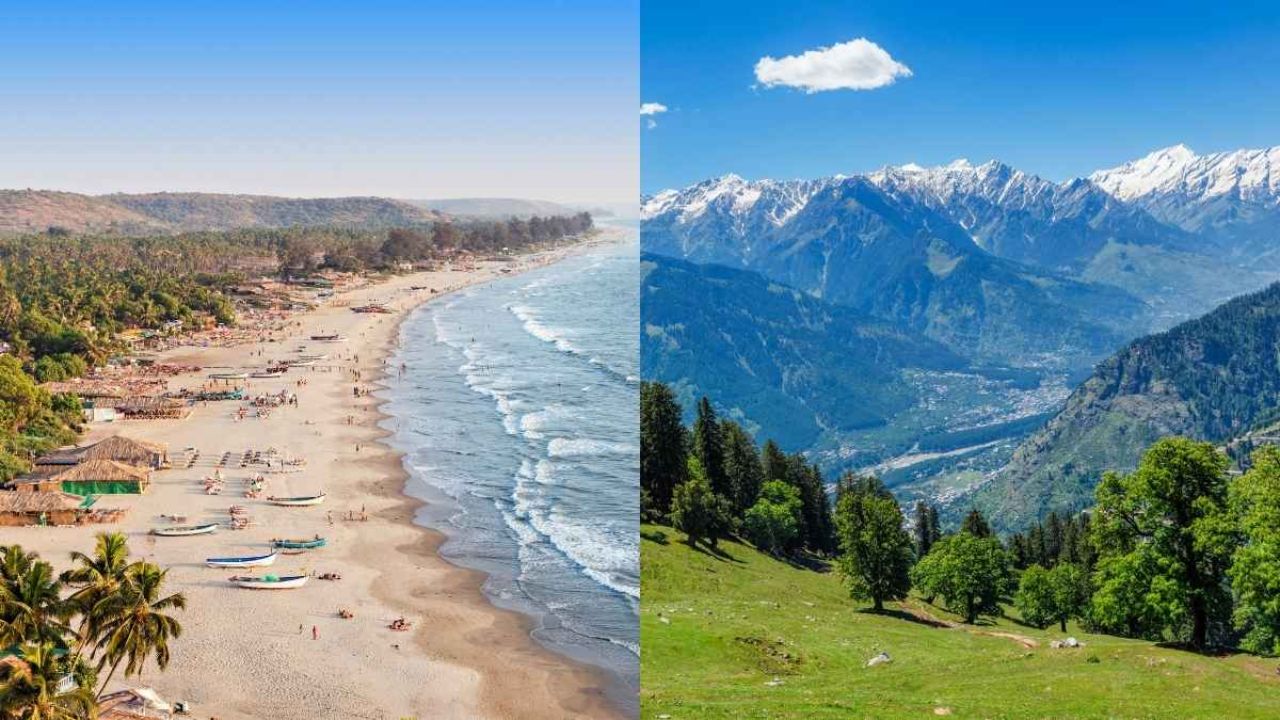
Weather can vary dramatically between mountain and coastal regions, even when they are located within the same country or only a short distance apart. Elevation, proximity to large bodies of water, wind patterns, and atmospheric pressure all influence how temperature, rainfall, humidity, and seasonal changes are experienced. Understanding these differences helps travelers, residents, and researchers prepare more effectively for changing conditions.
Temperature Differences
One of the most noticeable contrasts between mountain and coastal areas is temperature.
Table of Contents
In mountain regions, temperatures generally decrease as elevation increases. This happens because air becomes thinner and holds less heat at higher altitudes. On average, temperature drops about 6.5°C (11.7°F) for every 1,000 meters of elevation gain. As a result, mountain climates are often cooler than nearby lowland or coastal regions, even if they share the same latitude.
Coastal areas, on the other hand, tend to have milder temperatures. Oceans and seas act as natural temperature regulators. Water heats and cools more slowly than land, which means coastal regions experience less extreme temperature swings. Summers are typically cooler than inland areas, and winters are milder.
This difference is especially noticeable in regions where a mountain range sits near the ocean. The coast may feel warm and humid, while the mountains just a short drive away can be cool or even chilly.
Rainfall and Precipitation Patterns
Mountains significantly influence rainfall through a process known as orographic lift. When moist air from the ocean moves inland and encounters a mountain range, it is forced to rise. As the air rises, it cools and condenses, forming clouds and precipitation. This often leads to heavier rainfall on the windward side of mountains.
The opposite side, known as the leeward side, may experience much drier conditions. This phenomenon is called a rain shadow effect. As a result, mountain regions can have sharp contrasts in precipitation within short distances.
Coastal areas typically receive more consistent rainfall due to their proximity to moisture sources. Sea breezes and ocean evaporation provide a steady supply of humidity. However, rainfall in coastal areas is often less intense than in mountainous windward zones unless influenced by tropical storms or cyclones.
Humidity Levels
Humidity differs significantly between mountains and coastal regions.
Coastal areas usually have higher humidity because of constant evaporation from the sea. This moisture in the air can make temperatures feel warmer than they actually are, especially in summer. High humidity can also influence cloud formation and fog, particularly in the early mornings.
Mountain areas generally have lower humidity at higher elevations. The air is thinner and cooler, which reduces its moisture-holding capacity. However, valleys within mountain regions can trap moisture, sometimes creating localized fog or mist. Overall, mountain climates often feel fresher and less sticky compared to coastal environments.
Wind and Air Movement
Wind behavior also varies between these two landscapes.
Coastal regions experience daily sea breezes and land breezes. During the day, land heats up faster than water, causing cooler ocean air to move inland. At night, the process reverses. These breezes help moderate coastal temperatures and can influence cloud cover and rainfall.
Mountain regions experience complex wind systems. One common example is mountain-valley breezes. During the day, warm air rises along mountain slopes. At night, cooler air flows downward into valleys. Additionally, higher elevations may face stronger, more persistent winds due to fewer natural barriers.
These wind patterns can make mountain weather feel more changeable and sometimes more extreme than coastal weather.
Seasonal Variation
Seasonal changes can be more pronounced in mountain regions.
In many parts of the world, mountains experience heavier snowfall during winter. Higher elevations are often cold enough for snow accumulation, even if nearby coastal areas only receive rain. Snow cover also affects local temperatures, reflecting sunlight and keeping the ground cooler.
Coastal regions usually experience less seasonal variation. Winters are often milder because the ocean retains warmth from the summer months. Summers may feel cooler than inland areas due to ocean breezes. In tropical coastal regions, seasonal differences are often defined more by wet and dry seasons than by temperature shifts.
Mountain climates, by contrast, may shift dramatically between seasons, with warm summers and very cold winters.
Weather Stability and Rapid Changes
Mountain weather is generally less predictable and can change quickly. Rapid shifts in temperature, sudden storms, and fast-moving cloud systems are common. This is due to elevation differences, shifting air masses, and complex terrain effects.
Coastal weather tends to be more stable in comparison, although it can be influenced by large-scale systems such as tropical storms, hurricanes, or monsoons. Because oceans influence atmospheric pressure and temperature patterns, coastal climates often follow more gradual transitions.
Impact on Lifestyle and Travel
These weather differences influence how people live and travel.
Mountain communities often adapt to colder winters, possible snow, and rapidly changing conditions. Infrastructure, clothing, and travel planning must account for elevation-related risks.
Coastal communities prepare for humidity, salt air corrosion, and occasional storm surges. Tourism patterns also differ. Mountain destinations attract hikers and winter sports enthusiasts, while coastal areas draw beachgoers and water sports visitors.
Understanding how weather differs between mountain and coastal areas allows travelers to pack appropriately, plan activities wisely, and stay safe. Elevation and proximity to water are powerful factors shaping climate, and even short geographic distances can create dramatically different weather experiences.

Joao Fernandes is a climatologist and historian specializing in Cape Verde’s weather patterns and island history, with fifteen years at the national meteorological institute and university research. Based in Praia, Cape Verde, his professional background blends climate analysis, historical archival research, and public policy advising. His expertise covers seasonal wind and rainfall forecasts, climate resilience for coastal communities, and archival studies of colonial-era records. Joao co-authored the book “Climate and Culture of Cape Verde,” published peer-reviewed papers, and advised municipal planners on weather-informed heritage conservation.