

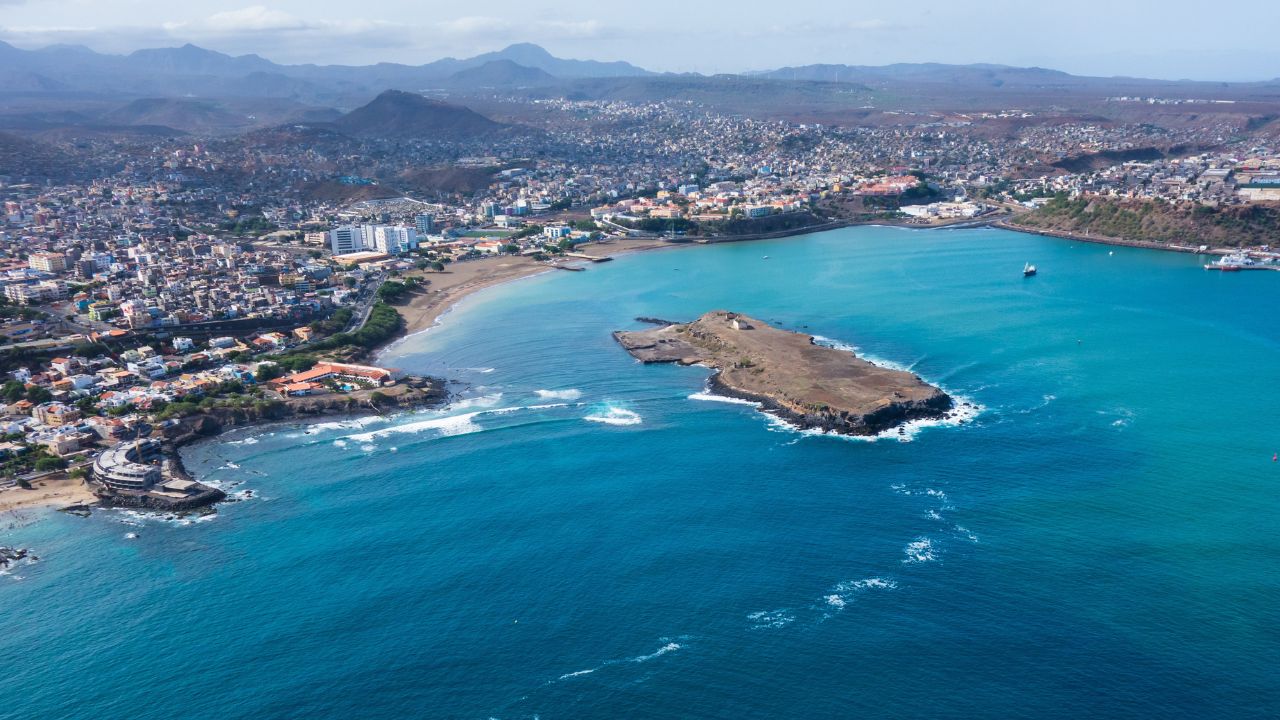
Cape Verde is unusual among African nations because it has no indigenous population. Unlike regions with long-established native communities, the islands were uninhabited before European contact. Understanding why requires looking at geography, early exploration, and how settlement unfolded in the Atlantic world.
Geographic Isolation of the Cape Verde Islands
Cape Verde is an archipelago of volcanic islands located in the Atlantic Ocean, about 570 kilometers off the west coast of Africa. The islands are relatively small, rugged, and lack permanent freshwater rivers. Before modern navigation, reaching them required advanced seafaring technology and knowledge of Atlantic wind patterns.
Table of Contents
Because of this isolation, early African societies living on the mainland had little practical reason or ability to settle the islands permanently. Fishing and coastal trade remained close to shore, and long open-ocean voyages were rare in pre-15th-century West Africa.
The Islands Were Uninhabited Before the 15th Century
Historical and archaeological evidence shows that Cape Verde had no permanent human settlement before the 1400s. No tools, dwellings, burial sites, or oral traditions indicate earlier habitation. When Europeans arrived, they found no villages, cultivated land, or domesticated animals.
This distinguishes Cape Verde from many other Atlantic islands, such as the Canary Islands, which had indigenous populations before European conquest.
Portuguese Discovery and First Settlement
Portuguese sailors reached Cape Verde around 1456 during the Age of Exploration. The islands were officially claimed by Portugal in 1462, and settlement began soon after, starting on Santiago Island.
Portugal viewed Cape Verde as strategically valuable:
- It served as a stopover for Atlantic voyages
- It became a hub for maritime trade
- It played a central role in the transatlantic slave trade
Since the islands were uninhabited, Portugal established colonies without displacing an existing population.
Enslaved Africans and the Formation of the Population
To populate and develop the islands, Portuguese settlers brought enslaved Africans from the West African coast. Over time, Cape Verde’s population emerged from a mix of:
- Portuguese colonists
- Enslaved Africans
- Later free Africans and settlers
This blending created a creole society, culturally and ethnically distinct from both Europe and mainland Africa. Cape Verdean Creole language, music, and traditions developed from this early mixing rather than from an indigenous base.
Climate and Environment as Barriers to Early Settlement
Cape Verde’s environment also discouraged early settlement. The islands have:
- Limited freshwater
- Poor soil for large-scale agriculture
- Frequent droughts
- Long dry seasons
Even after settlement began, life was difficult. Repeated famines occurred over the centuries, shaping migration patterns and contributing to the large Cape Verdean diaspora abroad.
Difference Between Indigenous and Creole Populations
An indigenous population is defined as a group that originated and developed in a region over thousands of years before outside contact. Cape Verde does not meet this definition because its population formed after European arrival.
Cape Verdeans are instead a creole people, meaning their identity emerged from the interaction of multiple cultures in a colonial setting. This is a key distinction that explains why Cape Verde has deep African roots but no indigenous ancestry tied to the islands themselves.
Cultural Identity Without Indigenous Origins
Although there is no indigenous population, Cape Verde has a strong and unified cultural identity. Music styles like morna and funaná, Creole language, and shared history bind the population together.
Cape Verdean identity is shaped by:
- Maritime history
- Migration and diaspora
- Cultural blending
- Resilience in harsh environmental conditions
This identity is no less authentic because it is not indigenous; it reflects centuries of adaptation and cultural creation.
Why This History Matters Today
Understanding why Cape Verde has no indigenous population helps explain:
- The country’s mixed heritage
- The importance of the diaspora
- The central role of migration in national life
- The development of Cape Verdean Creole culture
It also clarifies why Cape Verde is culturally distinct from mainland African nations, despite geographic proximity.
Conclusion
Cape Verde has no indigenous population because the islands were uninhabited until the 15th century, isolated by geography and challenging environmental conditions. Settlement began only after Portuguese discovery, with populations formed through colonial migration and the forced movement of enslaved Africans.
Rather than diminishing Cape Verde’s identity, this history explains the origins of its unique creole culture—one shaped by the Atlantic world, survival, and cultural fusion.

Joao Fernandes is a climatologist and historian specializing in Cape Verde’s weather patterns and island history, with fifteen years at the national meteorological institute and university research. Based in Praia, Cape Verde, his professional background blends climate analysis, historical archival research, and public policy advising. His expertise covers seasonal wind and rainfall forecasts, climate resilience for coastal communities, and archival studies of colonial-era records. Joao co-authored the book “Climate and Culture of Cape Verde,” published peer-reviewed papers, and advised municipal planners on weather-informed heritage conservation.