

Cape Verde’s islands may look close on a map, but weather conditions vary noticeably from island to island. For travelers, understanding these differences is important when choosing where to go, what to pack, and the best time to visit. Sal, Boa Vista, and Santiago are among the most visited islands, yet their climates are shaped differently by geography, elevation, and exposure to Atlantic winds.
This guide explains how weather differs across these three islands in a clear, practical way.
Table of Contents
Overall Climate Pattern in Cape Verde
Cape Verde has a dry, subtropical climate with warm temperatures year-round. The islands are influenced by northeast trade winds, ocean currents, and low annual rainfall. Most rain falls between August and October, while the rest of the year is largely dry.
Despite these shared conditions, each island experiences weather in its own way depending on terrain and location.
Weather in Sal Island
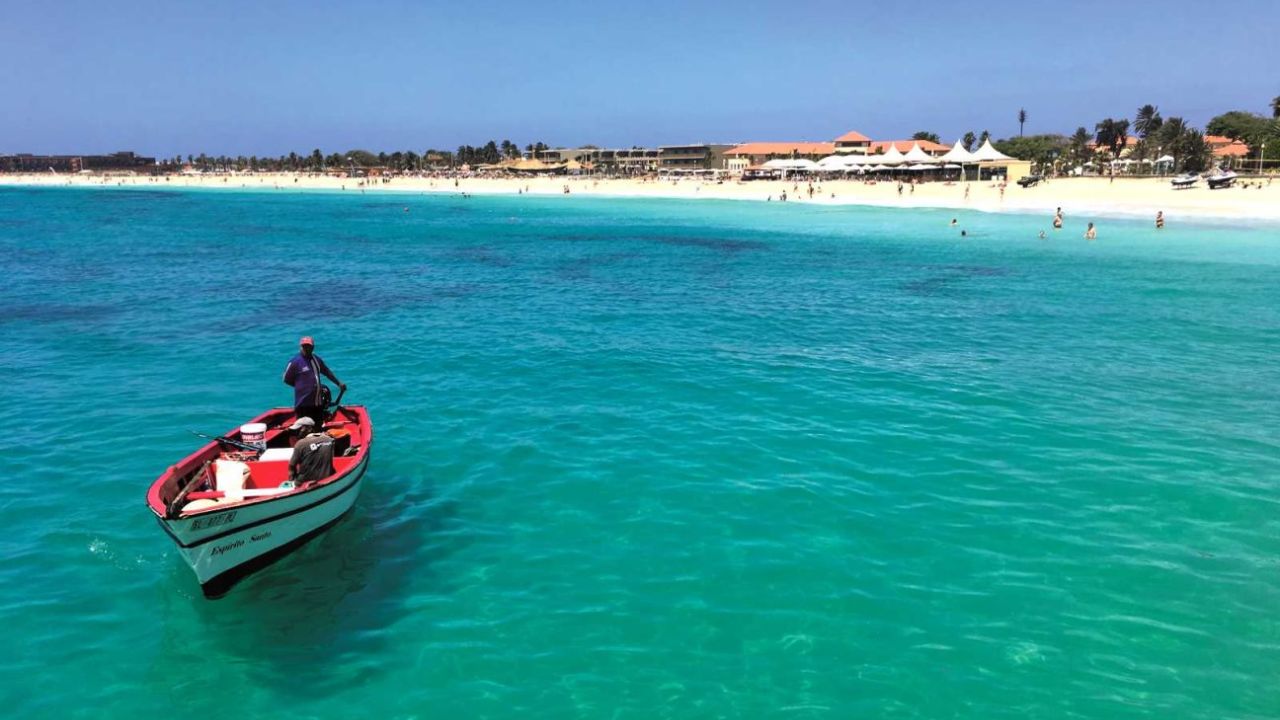
Sal is the driest and most predictable of the three islands. It is flat, low-lying, and fully exposed to the Atlantic, which limits cloud formation and rainfall.
Temperatures on Sal stay relatively stable throughout the year, usually ranging from 22°C to 30°C. Rainfall is minimal, even during the rainy season, and some years pass with almost no measurable rain at all. Humidity is generally low, which makes the heat feel comfortable.
Wind is a major feature of Sal’s climate. From November to March, steady trade winds are common. This makes Sal especially popular for kitesurfing, windsurfing, and sailing, but it can feel breezy for travelers expecting calm beach days.
Sal is ideal for visitors who want sun reliability, beach resorts, and outdoor activities without worrying about sudden weather changes.
Weather in Boa Vista Island
Boa Vista shares many similarities with Sal but has slightly more variation. Like Sal, it is mostly flat and sandy, which keeps rainfall low and sunshine high.
Temperatures are comparable to Sal, typically staying between 23°C and 30°C. Boa Vista receives a little more rainfall during the wet season, but showers are usually brief and localized. Long periods of rain are rare.
Boa Vista is also known for strong winds, especially during winter months. These winds shape the island’s dunes and coastline and are a key reason why the island feels more rugged and open than Sal.
Because of its vast beaches and quieter atmosphere, Boa Vista is well-suited for travelers seeking space, nature, and less-developed tourism, while still enjoying warm, dry weather.
Weather in Santiago Island
Santiago’s weather is noticeably different from Sal and Boa Vista. It is the largest and most mountainous island, and elevation plays a major role in its climate.
Coastal areas such as Praia remain warm and dry for most of the year, with temperatures similar to the other islands. However, inland and higher-altitude regions experience cooler temperatures, higher humidity, and more frequent cloud cover.
Santiago receives more rainfall, particularly during the August to October rainy season. When rain falls, it can be heavier and more sustained than on Sal or Boa Vista. This rainfall supports agriculture and greener landscapes, especially in valleys and rural areas.
Because of its terrain, weather on Santiago can change quickly. A sunny morning on the coast may coincide with clouds or light rain inland. Travelers should be prepared for greater variability.
Wind and Ocean Conditions Compared
Wind exposure differs across the three islands. Sal and Boa Vista are more directly exposed to trade winds, resulting in consistent breezes and choppier seas at certain times of year. Santiago’s varied coastline and mountains reduce wind intensity in some areas.
Sea temperatures are similar around all three islands, generally ranging from 22°C in winter to 26°C in late summer. However, stronger winds around Sal and Boa Vista can make the ocean feel cooler, especially outside peak summer months.
Rainy Season Impact on Each Island
The rainy season affects each island differently. On Sal, rain is often barely noticeable. Boa Vista may see occasional short showers. Santiago experiences the most visible impact, with greener landscapes and occasional heavy rainfall events.
For travelers, this means Sal and Boa Vista are safer choices for guaranteed dry weather, while Santiago offers a more seasonally dynamic environment.
Which Island’s Weather Is Best for You?
Choosing between Sal, Boa Vista, and Santiago depends on travel goals. Sal is best for predictable sunshine and resort-style travel. Boa Vista suits travelers who enjoy open landscapes and strong coastal winds. Santiago appeals to those interested in culture, history, and greener scenery, even if that means occasional rain.
Understanding these weather differences helps ensure expectations match reality, making any Cape Verde trip smoother and more enjoyable.

Joao Fernandes is a climatologist and historian specializing in Cape Verde’s weather patterns and island history, with fifteen years at the national meteorological institute and university research. Based in Praia, Cape Verde, his professional background blends climate analysis, historical archival research, and public policy advising. His expertise covers seasonal wind and rainfall forecasts, climate resilience for coastal communities, and archival studies of colonial-era records. Joao co-authored the book “Climate and Culture of Cape Verde,” published peer-reviewed papers, and advised municipal planners on weather-informed heritage conservation.