

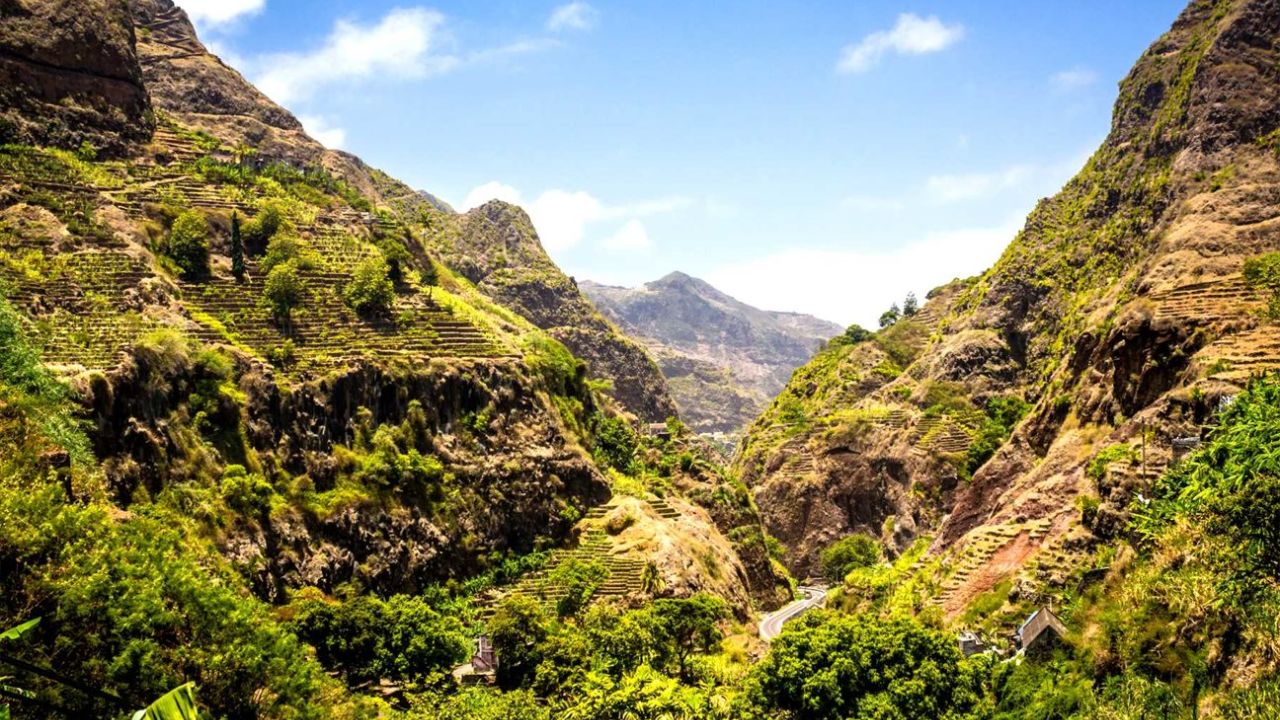
Santo Antão is often described as Cape Verde’s most dramatic island. Photos usually focus on its steep green valleys, winding mountain roads, and cliffside hiking routes. For many visitors, it’s a place to trek for a few days and then move on. But life on Santo Antão goes far beyond the hiking trails.
Behind the postcard views is a quiet, resilient island community shaped by agriculture, migration, tradition, and daily routines that rarely appear in travel brochures.
Table of Contents
A Landscape That Shapes Daily Life
Santo Antão is the westernmost island of Cape Verde and one of the most mountainous. Its terrain directly influences how people live. Villages are often tucked into valleys like Ribeira Grande, Paul, and Porto Novo, separated by steep ridges and winding roads.
Because of the geography, daily life requires planning. Transport between communities can take longer than distances suggest. Farmers climb terraces carved into mountainsides to tend crops. Children may walk along narrow paths to reach school. Even small errands can involve navigating hills and switchbacks.
The island’s beauty is not just scenic; it determines farming patterns, water access, and how communities are connected.
Agriculture at the Heart of the Economy
While tourism is growing, agriculture remains central to life on Santo Antão. Fertile valleys like Paul are known for sugarcane, bananas, cassava, yams, and beans. Small-scale farming is still a primary source of income for many families.
Sugarcane is especially important. It is used to produce grogue, Cape Verde’s traditional rum. Distilleries, often family-run, operate seasonally and are part of both economic and cultural life. Production methods remain largely traditional, using presses and fermentation techniques passed down through generations.
Unlike resort-driven islands such as Sal or Boa Vista, Santo Antão’s economy feels more local and community-based. Markets sell fresh produce grown nearby, and much of what residents consume is sourced from the land itself.
A Slower, Community-Oriented Pace
Life on Santo Antão moves at a slower rhythm. There are fewer large hotels and limited nightlife compared to São Vicente or Sal. Even in larger towns like Ribeira Grande, evenings tend to be calm.
Community ties are strong. Neighbors know each other, and social life often revolves around family gatherings, church events, and local festivals. Music and storytelling remain important, especially during celebrations. Morna and coladeira can be heard at community events, reflecting the island’s cultural connection to the broader Cape Verdean identity.
For visitors staying longer than a typical hiking trip, the slower pace can feel grounding. Days are structured around work, meals, and conversation rather than schedules packed with attractions.
Migration and the Diaspora Connection
Like much of Cape Verde, Santo Antão has a long history of migration. Many families have relatives in the United States, Portugal, the Netherlands, and elsewhere. Remittances from abroad play an important role in supporting households and local businesses.
It’s common to meet residents who have lived overseas and returned, or who are planning to join family members abroad. This diaspora connection shapes daily life, from architecture funded by relatives overseas to cultural influences brought back during visits.
For Cape Verdean-Americans visiting Santo Antão, this shared history often creates an immediate sense of familiarity and connection.
Education and Youth Opportunities
Access to education has improved over the years, but opportunities can still be limited compared to larger urban centers like Praia. Many young people leave Santo Antão after secondary school to pursue higher education or work on other islands.
This creates a generational dynamic where older residents maintain traditional farming and fishing practices, while younger people look outward for economic opportunity. Some eventually return, bringing new skills and perspectives that slowly shape the island’s development.
Balancing tradition with modernization is an ongoing reality for Santo Antão’s communities.
Tourism Without Overdevelopment
Tourism on Santo Antão is mostly eco-focused. Guesthouses, small hotels, and guided trekking tours dominate the industry. Unlike heavily resorted islands, development here remains relatively modest.
Visitors often stay in locally owned accommodations and eat at small family-run restaurants. This allows tourism revenue to circulate more directly within communities. However, it also means infrastructure can be basic. Roads, ferry schedules from São Vicente, and weather conditions can influence travel plans.
For residents, tourism provides income but has not completely transformed the island’s character. Farming, fishing, and everyday routines continue alongside visitor activity.
The Reality Behind the Beauty
Living on Santo Antão is not without challenges. Water management can be difficult due to irregular rainfall. Transportation costs are higher because goods must be imported by ferry. Healthcare facilities are available but more limited than on larger islands.
At the same time, the island offers strong social bonds, dramatic natural surroundings, and a sense of continuity with tradition. Many residents value the peace, community spirit, and connection to land that define life here.
More Than a Hiking Destination
For travelers who only come to hike, Santo Antão may appear as a dramatic backdrop of mountains and valleys. But for those who spend time beyond the trails, the island reveals a deeper story.
Life here is shaped by terrain, agriculture, migration, and close-knit communities. It is quieter than other Cape Verde islands, less commercial, and more rooted in everyday resilience. Understanding this side of Santo Antão offers a more complete picture — one that goes beyond scenic viewpoints and into the lived experience of the people who call the island home.

Marta Silva is a travel writer and certified island guide with over twelve years leading small-group tours across Cape Verde. Based in Praia, Cape Verde, her professional background combines on-the-ground guiding, itinerary planning, and hospitality consulting. Her expertise includes island itineraries, public transport logistics, sustainable travel tips, and local culture immersion. Marta authored the practical guidebook “Discovering Santiago” and contributes island guides for regional tourism publications; she has partnered with Cape Verde’s tourism board on community-based tourism initiatives and regular travel-workshops for visiting journalists.