

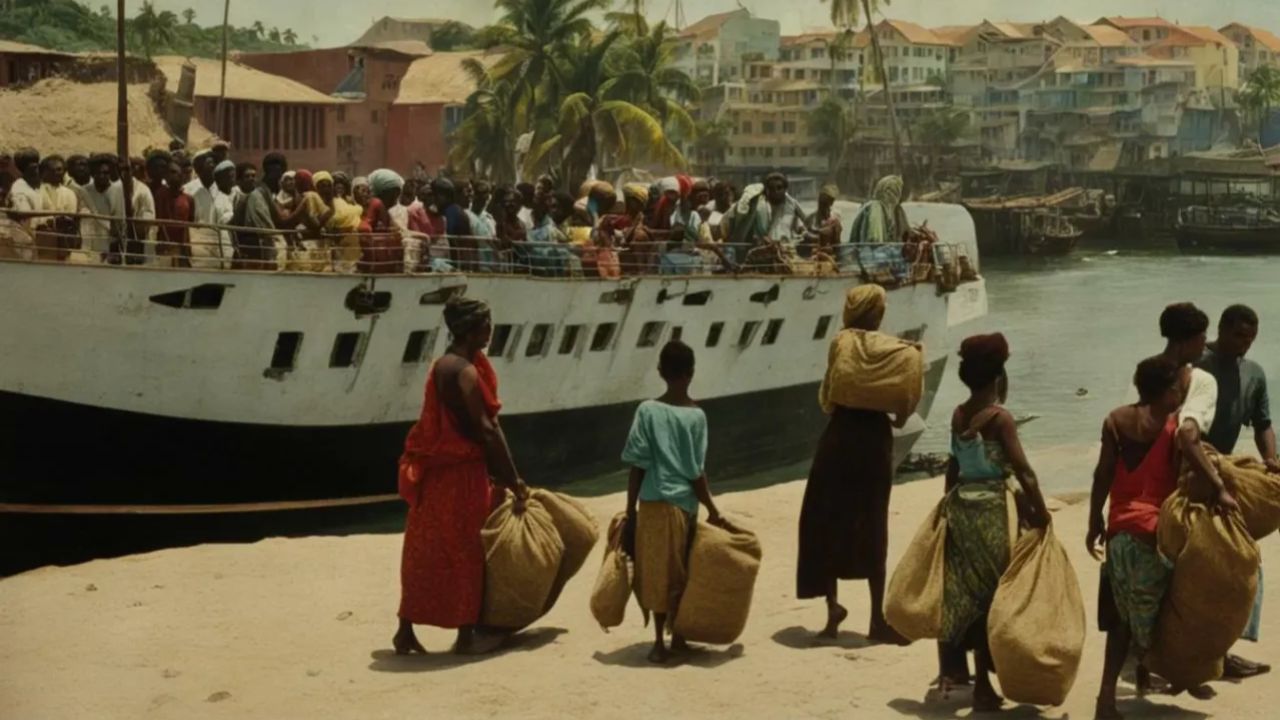
The islands of Cape Verde sit in the Atlantic Ocean off West Africa, in a region heavily influenced by dry trade winds and irregular rainfall. For centuries, this fragile climate made agriculture unreliable. Thin soils, limited freshwater, and long dry seasons meant that even small changes in weather could trigger food shortages. As the population grew under Portuguese colonial rule, pressure on land and resources increased, leaving communities highly vulnerable to famine.
Repeated Famines Under Colonial Rule
From the 18th through the mid-20th century, Cape Verde experienced repeated and devastating famines. Some of the worst occurred in the 1770s, 1830s, 1860s, and especially between 1941 and 1948. These crises were not caused by drought alone. Colonial policies prioritized maritime trade over food security, and relief efforts were often delayed or insufficient. Tens of thousands died, while many more were left with no viable way to survive on the islands.
Table of Contents
Hunger as a Push Factor for Migration
Famine turned migration from a choice into a necessity. When crops failed and livestock died, families faced starvation with few local alternatives. Leaving the islands became a survival strategy. Young men were often the first to go, seeking work abroad and sending remittances home. Over time, entire family networks followed, creating migration chains that permanently reshaped Cape Verdean society.
Early Routes: Whaling and Maritime Labor
One of the earliest migration pathways linked famine to the sea. In the 18th and 19th centuries, American and European whaling ships regularly stopped in Cape Verde. Islanders suffering from hunger signed on as sailors, cooks, and deckhands. These voyages carried Cape Verdeans to ports in New England, the Caribbean, and South America. What began as temporary labor often became permanent settlement when returning home offered little hope of stability.
The 20th Century Famines and Mass Emigration
The famines of the 1940s marked a turning point. Mortality was high, and global awareness of the crisis grew. At the same time, labor demand increased abroad. Portugal encouraged migration to its other territories, while the United States opened limited pathways through maritime and industrial work. Cape Verdeans moved in large numbers to Massachusetts, Rhode Island, and later to urban centers across the U.S. and Europe. Hunger had transformed migration into a mass phenomenon.
Diaspora Communities and Remittances
As famine-driven migration expanded, diaspora communities became lifelines for those who remained on the islands. Money sent from abroad helped families buy food, build homes, and survive future droughts. Over time, remittances became a core part of Cape Verde’s economy. Migration networks also reduced the risk of future famines by providing an external safety valve when local conditions worsened.
Cultural Memory of Famine
Even after independence in 1975 and improvements in food security, famine remains deeply embedded in Cape Verdean collective memory. Stories of hunger are passed down through families, reflected in music, oral history, and literature. This memory helps explain why migration continues even when conditions improve. Leaving the islands is still seen by many as a rational safeguard against uncertainty, rooted in historical experience rather than present hardship alone.
From Survival to Identity
What began as forced movement shaped by hunger has become a defining feature of Cape Verdean identity. Today, the diaspora is larger than the population living on the islands themselves. While modern migration is driven by education, opportunity, and global mobility, its foundations lie in the long history of famine. Understanding this connection explains why migration is not just an economic choice for Cape Verdeans, but a response shaped by generations of survival in a harsh environment.

Marta Silva is a travel writer and certified island guide with over twelve years leading small-group tours across Cape Verde. Based in Praia, Cape Verde, her professional background combines on-the-ground guiding, itinerary planning, and hospitality consulting. Her expertise includes island itineraries, public transport logistics, sustainable travel tips, and local culture immersion. Marta authored the practical guidebook “Discovering Santiago” and contributes island guides for regional tourism publications; she has partnered with Cape Verde’s tourism board on community-based tourism initiatives and regular travel-workshops for visiting journalists.