

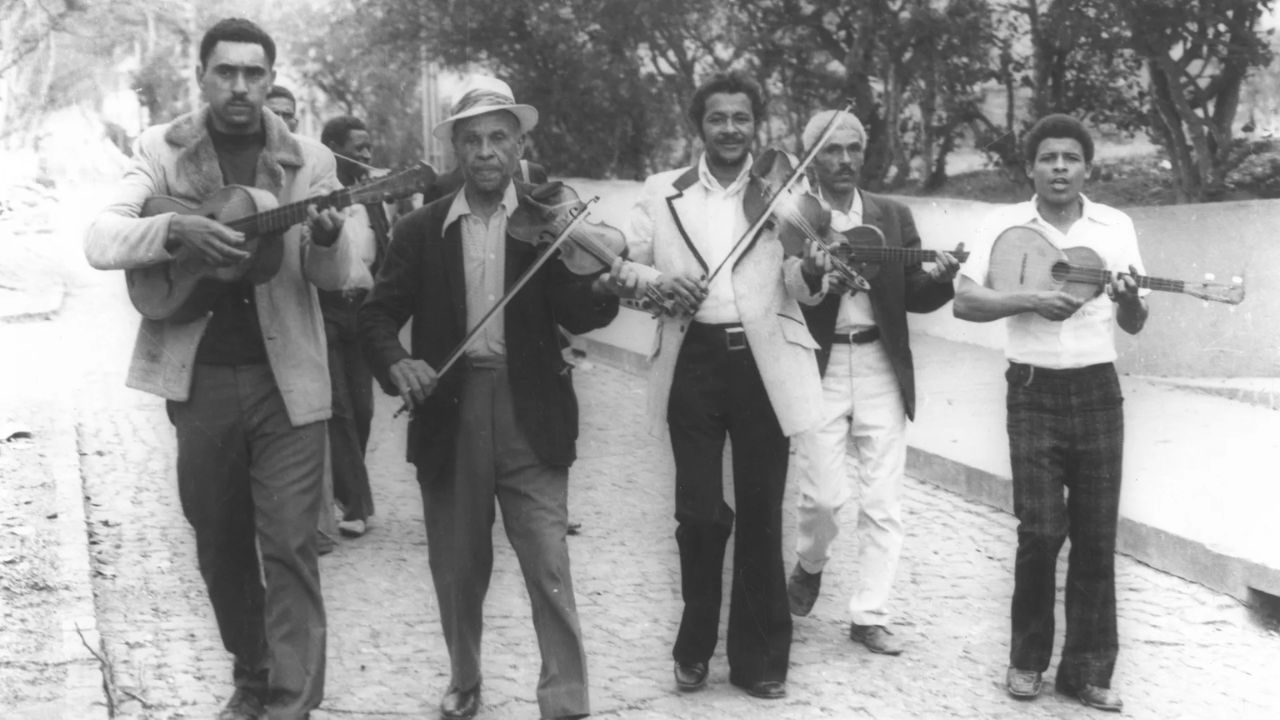
Cape Verdean music was shaped by geography, history, and movement. The islands sit at a crossroads between Africa, Europe, and the Americas, and this position deeply influenced local sound. From the 15th century onward, Cape Verde became a stopping point for sailors, traders, and enslaved people moving across the Atlantic. African rhythmic traditions mixed with Portuguese melodies, string instruments, and poetic forms, creating a musical culture rooted in hybridity.
Music quickly became a way for island communities to express identity, longing, and resilience. Because Cape Verde had no indigenous population, culture developed entirely through exchange. Songs carried memories of separation, migration, and survival, themes that remain central to Cape Verdean music today. Oral storytelling, call-and-response patterns, and European harmonic structures blended naturally over generations.
Table of Contents
Birth of Morna
Morna emerged in the 18th and 19th centuries, most strongly associated with the island of São Vicente and the port city of Mindelo. It developed as a slow, lyrical genre combining African emotional depth with Portuguese fado-style melancholy. Traditionally performed with guitar, cavaquinho, violin, and soft percussion, morna is intimate and reflective rather than celebratory.
Lyrically, morna focuses on longing, love, exile, and saudade — a deep emotional state often described as nostalgic yearning. These themes resonated strongly in a society shaped by drought, emigration, and ocean separation. Many early morna songs were written by poets and composers who lived between islands or abroad, reinforcing the genre’s connection to displacement and memory.
Morna and Cape Verdean Identity
As Cape Verdean migration increased in the 19th and 20th centuries, morna became a cultural anchor for the diaspora. Songs traveled with sailors and migrants to places like New England, Portugal, and West Africa. For Cape Verdeans abroad, morna preserved language, emotion, and shared experience across distance.
During the colonial period, morna also served as a subtle form of cultural resistance. While not overtly political, its lyrics often reflected hardship, inequality, and quiet defiance. After independence in 1975, morna took on renewed significance as a symbol of national identity. It represented continuity between past and present, linking colonial history with self-determination.
Global Recognition of Morna
International recognition of morna grew significantly in the late 20th century, largely through the work of Cesária Évora. Known as the “Barefoot Diva,” she brought morna to global audiences while preserving its emotional authenticity. Singing in Cape Verdean Creole, she resisted pressure to modernize the genre excessively, keeping its traditional structure intact.
Her global success helped establish morna as a respected world music tradition rather than a regional curiosity. Through international tours and recordings, morna reached listeners who had never heard of Cape Verde, turning music into a cultural ambassador. This recognition culminated in 2019 when morna was recognized by UNESCO as Intangible Cultural Heritage, acknowledging its historical and cultural importance.
Morna in Modern Cape Verde
Today, morna remains central to Cape Verde’s musical landscape, even as new genres like coladeira, funaná, and modern fusion styles gain popularity. Younger artists continue to perform and reinterpret morna, sometimes blending it with jazz, classical, or contemporary influences while preserving its emotional core.
In Mindelo, live morna performances remain a part of everyday cultural life, heard in small bars, cultural centers, and festivals. The genre is taught informally through family traditions and community gatherings rather than formal institutions, ensuring continuity across generations.
Morna is more than music in Cape Verde. It is memory, migration, and emotion woven into sound. Through its slow rhythms and poetic lyrics, it tells the story of a nation shaped by the sea and sustained by cultural expression. Even in a changing world, morna continues to define how Cape Verde remembers its past and voices its soul.

Marta Silva is a travel writer and certified island guide with over twelve years leading small-group tours across Cape Verde. Based in Praia, Cape Verde, her professional background combines on-the-ground guiding, itinerary planning, and hospitality consulting. Her expertise includes island itineraries, public transport logistics, sustainable travel tips, and local culture immersion. Marta authored the practical guidebook “Discovering Santiago” and contributes island guides for regional tourism publications; she has partnered with Cape Verde’s tourism board on community-based tourism initiatives and regular travel-workshops for visiting journalists.