

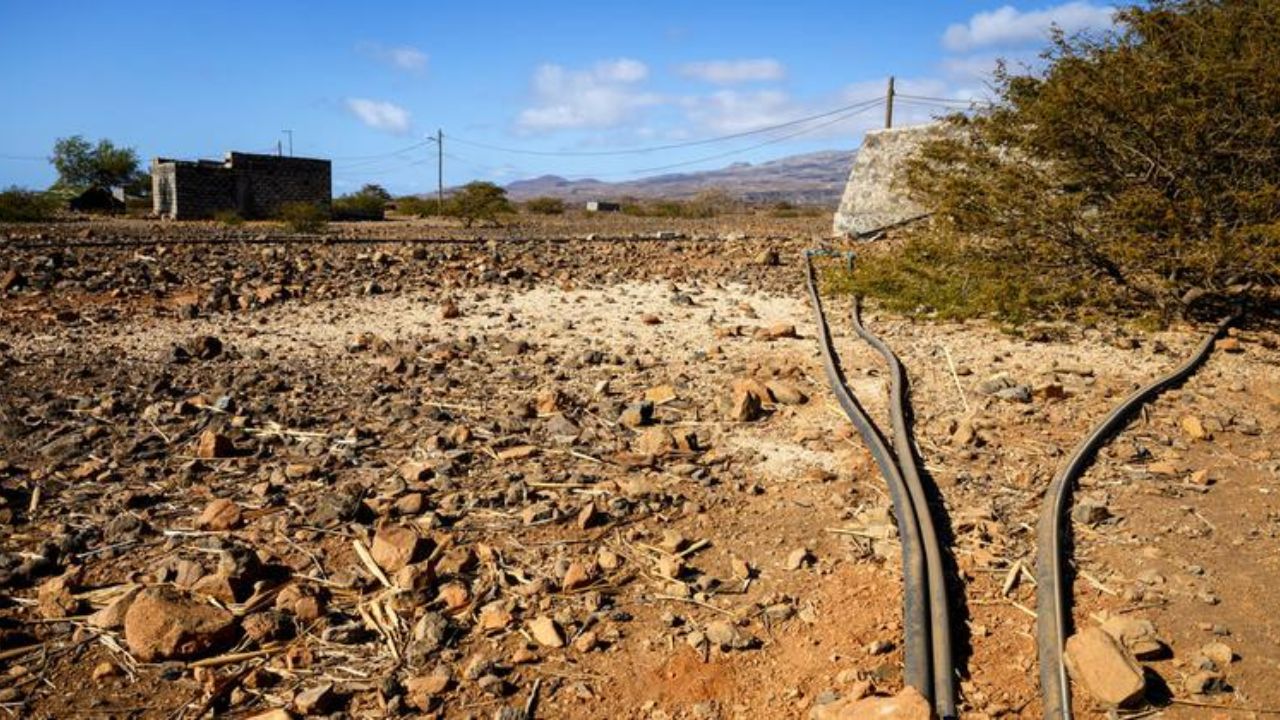
Cape Verde’s history cannot be understood without acknowledging the long struggle against drought and famine. Located in the Atlantic Ocean off the coast of West Africa, the archipelago sits within the Sahelian climate zone, where rainfall has always been scarce and unpredictable. For centuries, Cape Verdeans endured repeated environmental crises that shaped migration, social organization, and cultural resilience. These experiences left a lasting imprint on the islands and their people.
Geography and Climate Challenges
Cape Verde’s volcanic islands have limited freshwater resources, thin soils, and an irregular rainy season. Most rain falls during a short period between August and October, and even then, years could pass with little to no rainfall. Unlike river-based civilizations, Cape Verde relied almost entirely on seasonal rains to grow maize, beans, and cassava. When the rains failed, harvests collapsed quickly.
Table of Contents
The islands’ exposure to dry trade winds and periodic dust from the Sahara further reduced agricultural reliability. These conditions made Cape Verde especially vulnerable to prolonged droughts long before modern forecasting, irrigation, or food imports were possible.
Early Famines Under Colonial Rule
From the 16th century onward, Portuguese colonial authorities were aware of Cape Verde’s fragile environment but invested little in long-term food security. The islands served primarily as a maritime stopover and trading hub rather than an agricultural priority. When drought struck, local populations bore the consequences.
Historical records describe severe famines in the 1700s and 1800s that killed tens of thousands. Entire villages were abandoned as people searched for food or water. Colonial relief efforts were inconsistent and often delayed, favoring ports and administrative centers while rural areas suffered disproportionately.
The Catastrophic Famines of the 20th Century
The most devastating period came in the 20th century, particularly during the 1940s. A prolonged drought between 1941 and 1948 caused widespread crop failure across multiple islands. Estimates suggest that more than 30,000 people died, a significant portion of the population at the time.
Food shortages were compounded by wartime shipping disruptions, limiting imports. Many Cape Verdeans survived on wild plants, cactus, and minimal rations. These years are remembered as a national trauma, passed down through oral history and family memory.
Forced Migration and Diaspora Formation
Repeated famine made migration a survival strategy. From the 19th century onward, Cape Verdeans left for New England whaling ports, West African coastal cities, and later Europe. Emigration was not merely economic; it was often a matter of survival.
This movement helped form the Cape Verdean diaspora, particularly in the United States. Remittances from abroad became a critical lifeline, supporting families during drought years and reducing dependence on unreliable harvests.
Community Adaptation and Resilience
Despite hardship, Cape Verdeans developed coping mechanisms rooted in community solidarity. Shared labor systems, food pooling, and mutual aid networks helped families endure lean years. Knowledge of drought-resistant crops and careful water use was passed through generations.
Cultural expressions such as music, storytelling, and poetry also played a role in resilience. Songs and oral traditions preserved memories of loss while reinforcing collective identity and hope.
Change After Independence
Following independence in 1975, Cape Verde prioritized food security and disaster prevention. Investments in dam construction, reforestation, soil conservation, and early-warning systems reduced famine risk significantly. International partnerships and improved governance helped ensure that drought no longer resulted in mass starvation.
While water scarcity remains a challenge, modern Cape Verde has avoided the catastrophic famines that defined earlier centuries.
Legacy and Historical Memory
Famine and drought shaped Cape Verde’s demographic patterns, diaspora connections, and national consciousness. Remembering this history is essential to understanding the country’s emphasis on migration, social cohesion, and careful environmental management today.
Cape Verde’s past is not only a story of suffering, but of survival. Against extreme environmental odds, its people endured, adapted, and built a global community that continues to sustain the islands in the present.

Joao Fernandes is a climatologist and historian specializing in Cape Verde’s weather patterns and island history, with fifteen years at the national meteorological institute and university research. Based in Praia, Cape Verde, his professional background blends climate analysis, historical archival research, and public policy advising. His expertise covers seasonal wind and rainfall forecasts, climate resilience for coastal communities, and archival studies of colonial-era records. Joao co-authored the book “Climate and Culture of Cape Verde,” published peer-reviewed papers, and advised municipal planners on weather-informed heritage conservation.