

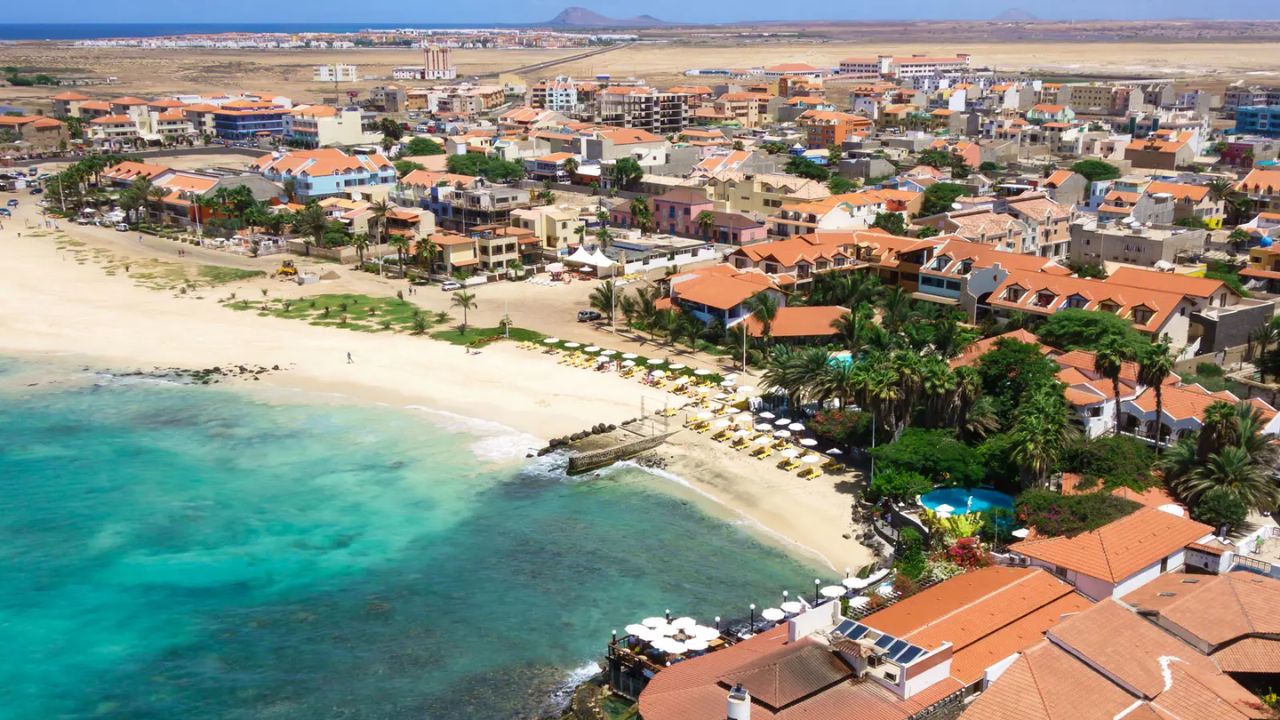
Sal is often marketed as Cape Verde’s all-inclusive paradise — wide beaches, turquoise water, steady sunshine, and comfortable resorts. For many visitors, especially those flying in for a short beach holiday, the resort experience is the main attraction.
But step outside the hotel gates, and you’ll find a different side of Sal Island. Beyond the pool decks and buffet lines lies a local rhythm shaped by trade winds, fishing traditions, migration, and everyday island life. Here’s what many tourists rarely see — and why it matters.
Table of Contents
Santa Maria Beyond the Beachfront
Santa Maria is the heart of tourism on Sal, and most visitors spend their time near the beach strip. Outside that polished seafront, however, the town feels more residential and grounded.
Walk a few streets inland and you’ll notice small grocery shops, children playing football in sandy lots, local snack bars serving grilled fish, and pastel-colored houses built to withstand wind and salt. Life moves more slowly here. You hear Creole spoken in conversation, music drifting from open windows, and the hum of scooters navigating narrow roads.
It’s still Santa Maria — just less curated.
The Real Fishing Economy
Many resort menus feature fresh tuna, wahoo, and lobster, but few guests see where that seafood begins. Early in the morning near Santa Maria pier, local fishermen head out in small wooden boats. The pier becomes a gathering place when they return, with fish cleaned and sold nearby.
Fishing remains part of Sal’s identity, even as tourism dominates the economy. Watching the daily catch being brought in offers perspective on how deeply connected the island is to the Atlantic.
It also reminds visitors that tourism sits alongside — not above — long-standing livelihoods.
Murdeira and Quiet Coastal Living
Most package tourists never venture to Murdeira, a small bay between Espargos and Santa Maria. Unlike the busy resort areas, Murdeira feels residential and understated.
Here you’ll find:
- Calm waters sheltered by Monte Leão
- Modest apartment communities
- Fewer restaurants and shops
- A quieter, long-term expat presence
It offers a glimpse into what daily coastal life looks like without the resort structure. Sunsets here are less crowded and more contemplative.
Espargos: The Administrative Center
Espargos, the island’s main town near the airport, is rarely on tourist itineraries. It doesn’t have beaches, and it doesn’t promote itself as a destination. But it is where much of Sal’s everyday life unfolds.
Government offices, schools, small businesses, and family homes shape Espargos. Walking through its streets gives insight into how the island functions beyond tourism.
You’ll notice:
- Public squares where people gather
- Local bakeries and cafés
- Everyday markets selling produce and essentials
- A stronger sense of routine work life
It may not be scenic in the postcard sense, but it provides context — something resorts cannot.
The Salt Flats That Gave Sal Its Name
Long before luxury hotels arrived, salt defined the island’s economy. The Pedra de Lume salt crater, inside an extinct volcano, is one of Sal’s most fascinating historic sites.
Visitors can float in the highly saline water, but what’s often overlooked is the historical significance. In the 19th century, salt extraction supported trade routes and connected Sal to global markets.
Standing in the crater, surrounded by rust-colored volcanic walls and shallow reflective pools, you’re reminded that Sal’s story began long before tourism.
Informal Neighborhoods and Local Resilience
Outside resort zones, you may notice areas that feel less developed — sandy roads, unfinished buildings, modest housing. These neighborhoods reflect both economic growth and ongoing challenges.
Tourism has brought jobs and infrastructure, but it has not eliminated inequality. Many workers commute daily from residential zones into resort areas. Understanding this contrast helps visitors approach the island with more awareness.
Sal is beautiful, but it is also complex — shaped by migration, remittances, limited natural resources, and dependence on external markets.
Wind, Dust, and Daily Climate Reality
Brochures promise endless sunshine, which is mostly true. But they rarely mention the persistent trade winds that define life on Sal. During certain months, especially winter, the wind can be strong and constant.
There are also occasional dust events carried from the Sahara, reducing visibility and softening the sky into a pale haze. Locals are accustomed to these patterns; they influence architecture, clothing choices, and daily routines.
Weather here is not just about beach conditions — it shapes how people live.
Music, Community, and Everyday Culture
Resorts often host curated performances, but authentic music culture exists in small bars and informal gatherings. Cape Verdean genres like morna, funaná, and coladeira are deeply rooted in storytelling and emotion.
In local spaces, music feels less staged and more personal. It connects generations and preserves identity, especially in a country shaped by migration.
Spending time outside resort entertainment spaces can reveal a stronger cultural heartbeat.
Seeing Sal With Context
None of this means resorts are wrong or inauthentic. They provide comfort, employment, and economic stability. But they represent only one layer of the island.
To understand Sal more fully:
- Walk beyond the beachfront roads
- Visit local shops
- Observe daily routines
- Learn a few words of Creole
- Ask respectful questions
Sal Island is more than an all-inclusive escape. It is a living community shaped by history, climate, work, and culture. When tourists step outside the resort bubble — even briefly — they often return with a deeper appreciation of the island and its people.
And that’s a version of Sal many travelers rarely see.

Marta Silva is a travel writer and certified island guide with over twelve years leading small-group tours across Cape Verde. Based in Praia, Cape Verde, her professional background combines on-the-ground guiding, itinerary planning, and hospitality consulting. Her expertise includes island itineraries, public transport logistics, sustainable travel tips, and local culture immersion. Marta authored the practical guidebook “Discovering Santiago” and contributes island guides for regional tourism publications; she has partnered with Cape Verde’s tourism board on community-based tourism initiatives and regular travel-workshops for visiting journalists.