

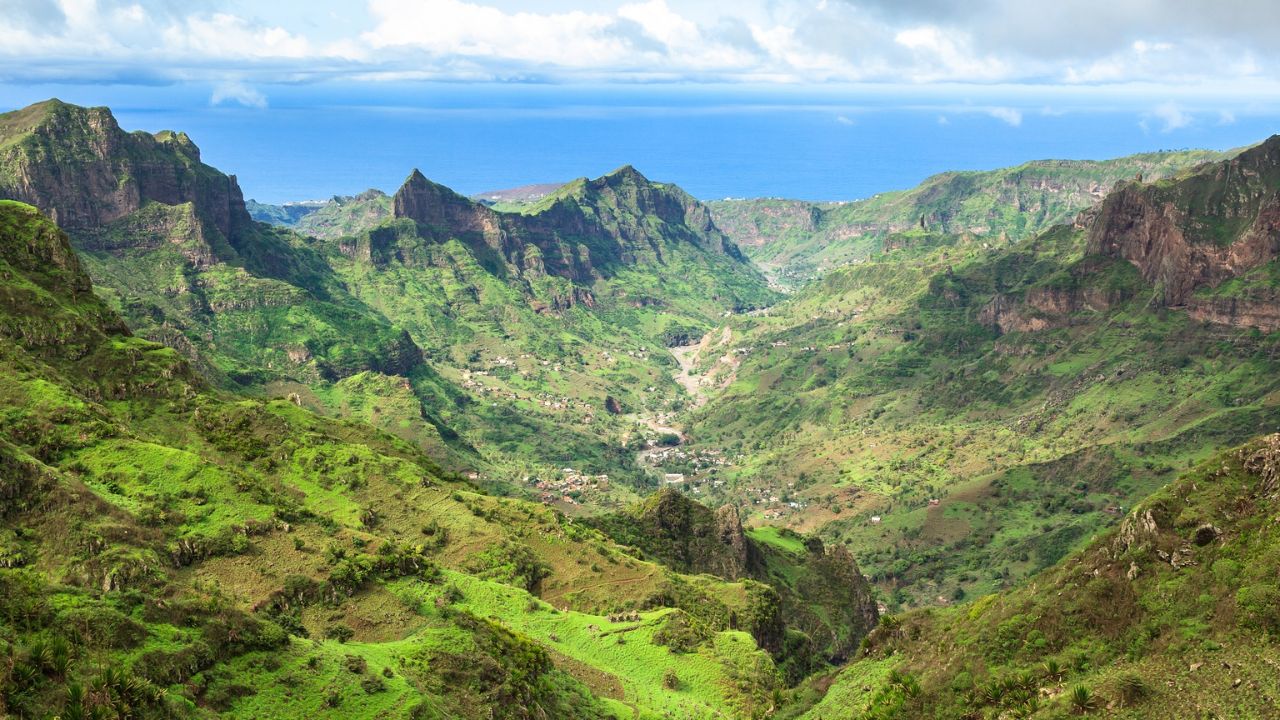
Cape Verde is often described as having one of the most stable climates in the Atlantic, but many travelers are surprised when real conditions don’t exactly match what weather apps show. While temperatures remain fairly consistent year-round, Cape Verde’s weather is only partially predictable, especially when it comes to wind, rain, and ocean conditions.
Forecasts usually get the basics right—average heat, sunshine levels, and general seasons. What they struggle with is the micro-detail that actually affects travel experiences, such as sudden wind shifts, localized rain, or rough seas between islands. Understanding why this happens helps travelers plan better and avoid frustration.
Table of Contents
Why Cape Verde Weather Seems Stable on Paper
On a broad level, Cape Verde has a dry, subtropical climate shaped by the Atlantic Ocean and trade winds. Average daytime temperatures stay within a narrow range for most of the year, usually hovering between the low 20s and high 20s Celsius. This consistency leads many forecasting models to label the islands as “low-variability.”
Because extreme cold, heat waves, and long rainy periods are rare, long-range forecasts tend to look reassuringly simple. This creates the impression that Cape Verde weather is easy to predict. In reality, stability at the macro level hides high short-term variability, especially across different islands.
What Weather Forecasts Commonly Get Wrong
The biggest forecasting errors in Cape Verde come from overgeneralization. Many weather apps treat the archipelago as a single point on the map, rather than a spread-out group of islands with different elevations, coastlines, and wind exposure.
Wind strength is frequently underestimated. A day predicted as “breezy” can feel extremely windy on islands like Sal or Boa Vista, especially near open beaches. Rain forecasts also cause confusion. A “rainy day” may mean a brief shower lasting ten minutes in one town while nearby areas remain dry all day.
Sea conditions are another weak point. Forecasts often fail to reflect real-world swell, chop, and currents that affect ferry crossings, swimming safety, and water sports. For travelers, these details matter far more than average temperature readings.
The Role of Trade Winds and Harmattan
Trade winds are one of the main reasons Cape Verde weather behaves unpredictably at a local level. These winds blow steadily from the northeast for much of the year, but their intensity can change quickly, sometimes within hours.
During certain months, especially winter, the Harmattan wind brings dry air and fine dust from the Sahara. This can reduce visibility, mute sunlight, and affect air quality without showing up clearly in standard forecasts. Travelers may notice hazy skies and cooler-feeling days even when temperatures remain warm.
Forecast models often detect the presence of wind systems but struggle to predict exactly how strongly they will impact each island on a given day.
Why Rainfall Is Hard to Forecast Accurately
Rain in Cape Verde is highly localized and seasonal. The rainy period, generally late summer to early fall, does not mean constant rain. Instead, it involves short, intense bursts that may affect one island or valley and completely miss another.
Mountains play a major role here. Islands with higher elevations, such as Santiago or Santo Antão, can experience sudden showers caused by rising air currents. Coastal areas may stay dry at the same time. Because rainfall events are brief and uneven, daily forecasts often exaggerate their impact.
This is why visitors sometimes cancel plans based on rain predictions, only to experience sunny conditions for most of the day.
Ocean Conditions vs Land Forecasts
Many travelers rely on standard weather apps that focus on land-based conditions, but in Cape Verde, the ocean often dictates real comfort and safety. Swells generated thousands of kilometers away can reach the islands with little local warning.
Forecasts may show clear skies and warm temperatures while the sea remains rough, making swimming or boat trips difficult. Conversely, a cloudy or windy day on land may still offer calm, swimmable waters in sheltered bays.
Because marine forecasts require different data models, they are often less visible or simplified in consumer apps, leading to mismatched expectations.
How Locals Read the Weather Differently
Residents and experienced travelers tend to rely less on single-number forecasts and more on patterns and observation. Wind direction, cloud movement, sea color, and even morning humidity are used as practical indicators of how the day will unfold.
Local knowledge also accounts for island-specific behavior. What counts as “bad weather” on one island may be normal conditions on another. This context is rarely captured in global forecasting platforms.
How Travelers Should Use Forecasts Wisely
Rather than asking whether Cape Verde weather is predictable, a better question is how to use forecasts realistically. Forecasts work best as general planning tools, not minute-by-minute guarantees. Checking multiple sources, including marine and wind forecasts, gives a more accurate picture.
Travelers should also plan flexible itineraries, especially for activities like hiking, ferry travel, or water sports. Understanding that conditions can change quickly—but rarely dangerously—helps set expectations and reduces stress.
Final Takeaway
Cape Verde’s weather is predictable in its overall character but unpredictable in its daily details. Forecasts usually get temperatures right, but often miss wind strength, localized rain, and ocean conditions that matter most to travelers. By combining forecasts with local insight and flexible planning, visitors can navigate the islands with confidence and enjoy what Cape Verde offers in almost any conditions.

Marta Silva is a travel writer and certified island guide with over twelve years leading small-group tours across Cape Verde. Based in Praia, Cape Verde, her professional background combines on-the-ground guiding, itinerary planning, and hospitality consulting. Her expertise includes island itineraries, public transport logistics, sustainable travel tips, and local culture immersion. Marta authored the practical guidebook “Discovering Santiago” and contributes island guides for regional tourism publications; she has partnered with Cape Verde’s tourism board on community-based tourism initiatives and regular travel-workshops for visiting journalists.