

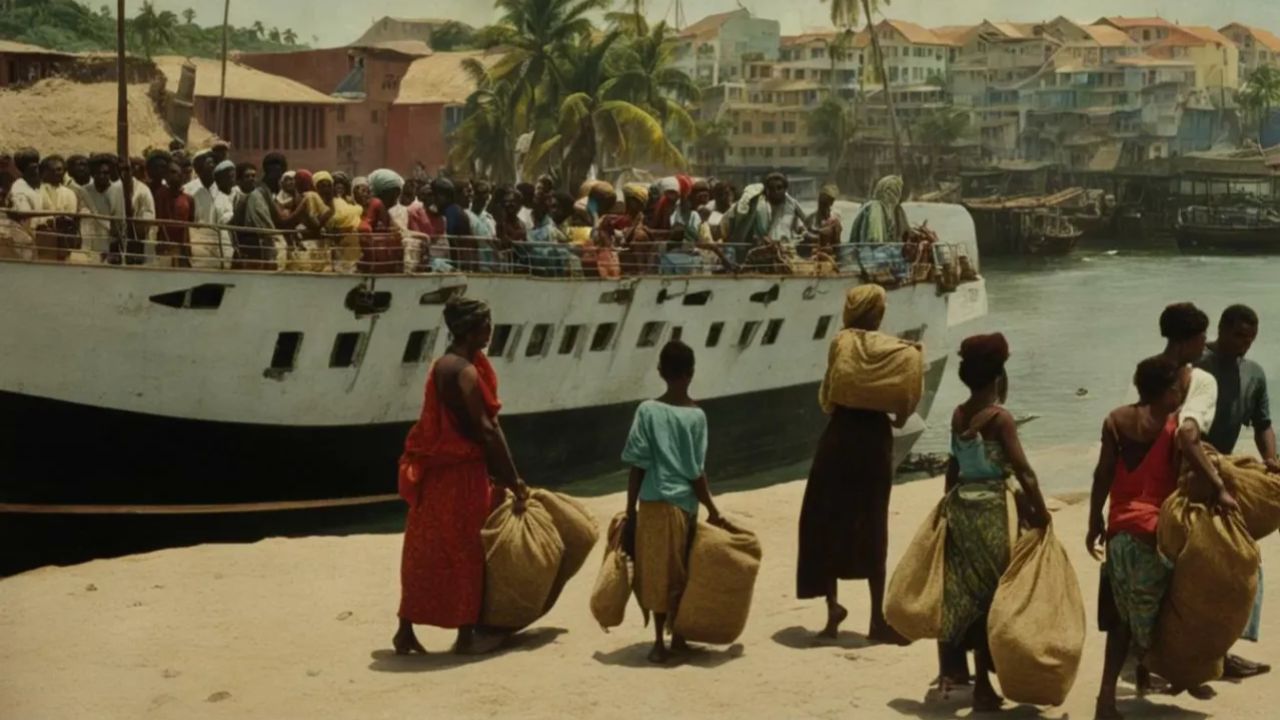
Daily Life in Cape Verde During Colonial Times
Cape Verde’s daily life during the colonial era was shaped by geography, trade, forced migration, and the long presence of Portuguese rule. Located at the crossroads of Atlantic shipping routes, the islands developed a social and economic structure unlike most mainland African colonies. Life was marked by hardship, adaptation, and the gradual blending of African and European cultures that still defines Cape Verdean identity today.
The Role of the Portuguese Colonial System
Portuguese colonization of Cape Verde began in the mid-15th century. The islands were uninhabited before settlement, which meant colonial society was built entirely through imported populations—European settlers and enslaved Africans. The colonial administration governed through local officials loyal to Lisbon, enforcing laws, taxes, and trade regulations designed primarily to benefit Portugal.
Table of Contents
Daily governance focused on ports, customs duties, and maintaining order in urban centers such as Ribeira Grande (Cidade Velha) and later Praia and Mindelo. For most residents, colonial authority was distant but deeply influential, shaping labor, land ownership, and social mobility.
Slavery and Forced Labor in Everyday Life
Slavery was central to Cape Verde’s colonial economy for centuries. Enslaved Africans were brought to the islands both for local labor and for redistribution across the Atlantic. Daily life for enslaved people involved agricultural work, port labor, domestic service, and skilled trades such as carpentry or ship repair.
Living conditions were harsh. Enslaved individuals had little legal protection and were subject to strict control. However, Cape Verde’s relatively small population and urban nature allowed for limited interaction between enslaved people, freed Africans, and Europeans. Over time, this led to a growing population of free people of mixed ancestry, which slightly softened—but did not erase—the brutality of the system.
Work, Occupations, and Economic Survival
For free residents, daily work depended heavily on location and class. Coastal towns revolved around ports, shipping, and trade. Sailors, dock workers, merchants, and artisans formed the backbone of urban life. Inland areas relied on subsistence agriculture, livestock raising, and salt production, especially on islands like Sal and Maio.
Droughts were frequent and devastating. Crop failures often led to famine, forcing families to rely on aid, migration, or remittances from relatives abroad. Economic survival required flexibility, communal support, and seasonal movement between islands or occupations.
Housing, Food, and Living Conditions
Most people lived in modest stone or mud-brick homes with limited space and basic furnishings. Homes were built to withstand heat and wind rather than comfort. Access to clean water was a daily challenge, particularly during dry seasons, and collecting water could dominate household routines.
Food was simple and heavily dependent on availability. Diets included maize, beans, cassava, and fish when accessible. Meat was rare for most families. Meals were often communal, reinforcing social bonds in difficult conditions. Scarcity shaped daily habits, encouraging frugality and resilience.
Social Hierarchies and Community Life
Colonial Cape Verde had a rigid social hierarchy. At the top were Portuguese officials and wealthy settlers, followed by free mixed-race populations, and at the bottom enslaved Africans. However, unlike many colonies, Cape Verde developed a relatively large educated mixed-race class that worked as clerks, teachers, sailors, and administrators.
Community life centered on churches, markets, and festivals. Catholicism dominated public life, but African traditions survived in music, storytelling, and informal customs. Despite colonial restrictions, communities found ways to preserve identity and mutual support.
Education, Religion, and Cultural Expression
Education during colonial times was limited and largely reserved for elites. Schools were run by religious institutions and focused on Portuguese language, religion, and basic literacy. Most people learned skills informally through apprenticeships or family traditions.
Religion played a major role in daily routines. Church attendance structured the week, and religious festivals provided rare moments of celebration. Music and oral traditions flourished quietly, blending African rhythms with European influences—a foundation for modern Cape Verdean culture.
Migration and the Seeds of the Diaspora
Economic hardship and limited opportunity pushed many Cape Verdeans to migrate, even during colonial times. Sailors joined foreign ships, while others moved to the Americas, Europe, or other African colonies. Migration became a survival strategy and reshaped family life, with long separations and reliance on remittances.
This constant movement planted the roots of Cape Verde’s global diaspora, influencing daily life at home through letters, money, and new ideas from abroad.
Legacy of Colonial Daily Life
Daily life in colonial Cape Verde was defined by struggle, adaptation, and cultural blending. While colonial rule imposed inequality and hardship, it also created a uniquely creole society shaped by resilience and shared experience. Many aspects of modern Cape Verde—migration patterns, community values, music, and identity—trace directly back to these everyday colonial realities.

Marta Silva is a travel writer and certified island guide with over twelve years leading small-group tours across Cape Verde. Based in Praia, Cape Verde, her professional background combines on-the-ground guiding, itinerary planning, and hospitality consulting. Her expertise includes island itineraries, public transport logistics, sustainable travel tips, and local culture immersion. Marta authored the practical guidebook “Discovering Santiago” and contributes island guides for regional tourism publications; she has partnered with Cape Verde’s tourism board on community-based tourism initiatives and regular travel-workshops for visiting journalists.