

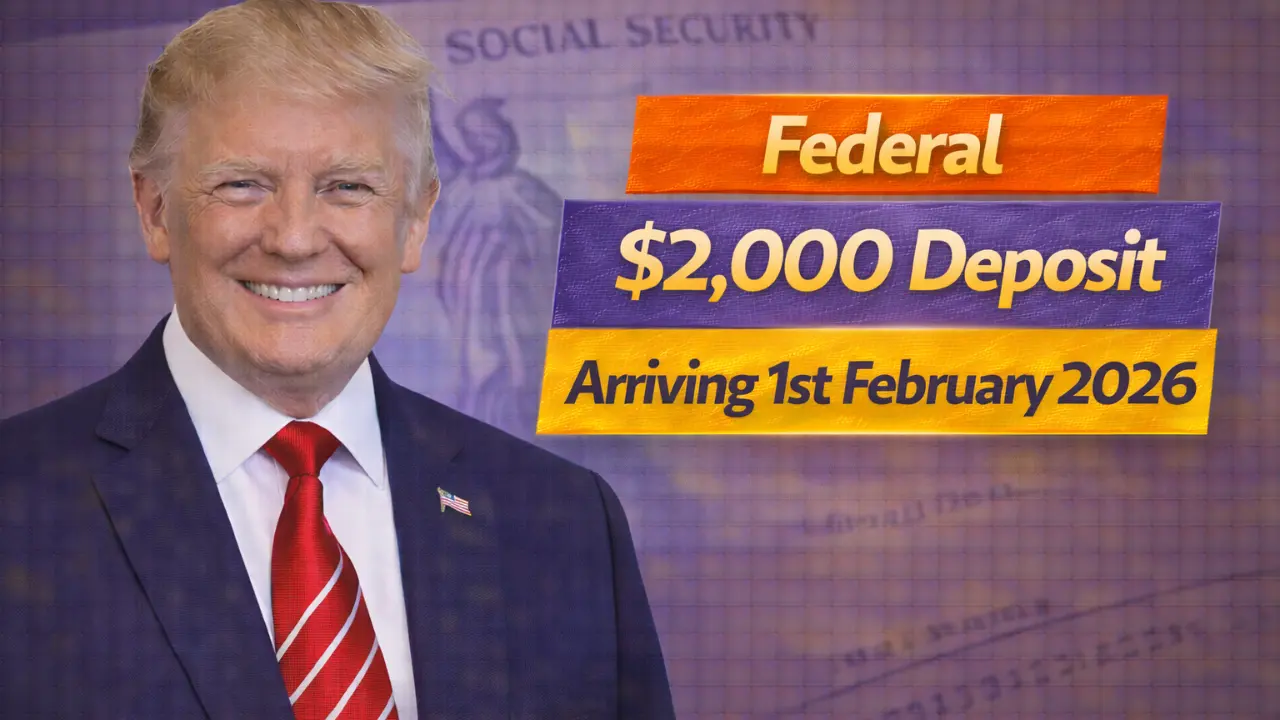
The possibility of a federal $2,000 deposit arriving on 1st February 2026 has generated widespread attention across the United States. Millions of Americans are searching for clarity on whether the payment is real, who may qualify, how it could be delivered, and what steps—if any—beneficiaries should take to ensure they receive it. While official confirmation and final legislative details are still evolving, this guide provides a comprehensive, fact-based overview of what is known so far, how similar federal payments have worked in the past, and what beneficiaries should realistically expect.
This article is designed as a complete, plain-language reference for households, retirees, workers, and benefit recipients trying to separate verified information from speculation.
Table of Contents
Overview of the Federal $2,000 Deposit Discussion
The proposed $2,000 federal deposit is being discussed as part of broader federal efforts to address persistent cost-of-living pressures, including housing, food, health care, and energy expenses. Inflation has moderated compared to earlier peaks, but essential household costs remain elevated for many Americans, particularly seniors, low-income workers, and fixed-income households.
The $2,000 figure has gained traction because it mirrors past federal relief benchmarks and aligns with proposals floated by lawmakers and advocacy groups seeking targeted or temporary financial support rather than long-term entitlement expansions.
Importantly, no universal payment is automatically guaranteed at this stage. Instead, discussions focus on specific beneficiary groups and delivery mechanisms that could allow payments to be issued quickly if authorized.
Who Could Potentially Receive the $2,000 Deposit
Based on historical precedent and current policy discussions, eligibility would likely focus on Americans already connected to federal payment systems. This allows faster distribution and reduces administrative complexity.
Potential beneficiary groups include:
- Social Security retirees receiving monthly benefits
- Supplemental Security Income recipients
- Social Security Disability Insurance beneficiaries
- Veterans receiving VA compensation or pensions
- Low- and moderate-income taxpayers meeting income thresholds
- Federal benefit recipients using Direct Express or similar debit programs
Eligibility, if finalized, would almost certainly include income caps or benefit-based criteria. High-income earners would be unlikely to qualify.
Expected Payment Method and Delivery System
If approved, the federal government would rely on existing payment infrastructure already used for Social Security, VA benefits, and tax refunds. This approach minimizes delays and ensures funds reach recipients efficiently.
Common delivery methods would include:
- Direct deposit to bank accounts on file
- Deposits to Direct Express debit cards
- Electronic benefit cards linked to federal programs
- Paper checks only in limited cases
For beneficiaries already receiving monthly federal payments, no additional application would likely be required.
Why 1st February 2026 Is Being Mentioned
The 1st February date has emerged because it aligns with several administrative and fiscal considerations:
- Start of a new payment cycle for many federal benefit programs
- Timing after January budget and reconciliation discussions
- Ability to implement payments before peak tax season processing
- Alignment with monthly benefit disbursement schedules
However, it is critical to understand that dates discussed publicly are tentative until formally announced by federal agencies.
Comparison With Previous Federal Payments
Understanding how earlier federal payments worked helps set realistic expectations for 2026.
| Program or Payment | Typical Amount | Delivery Method | Application Required |
| Economic Impact Payments | $600–$1,400 | Direct deposit, check | No |
| Child Tax Credit Advances | Monthly payments | Direct deposit | Yes |
| State inflation relief checks | $200–$1,000 | Mixed methods | Varies |
| Proposed 2026 federal deposit | $2,000 | Direct deposit | Likely no |
Past programs show that when payments are tied to existing benefit systems, rollout tends to be faster and more reliable.
Income Limits and Financial Thresholds
Although final rules have not been published, income thresholds would almost certainly apply. These thresholds help target relief to households most affected by rising costs.
Likely factors considered:
- Adjusted gross income from recent tax filings
- Filing status such as single, married, or head of household
- Benefit enrollment status rather than employment status
- Household size for means-tested programs
For Social Security and disability recipients, eligibility would likely be automatic unless income exceeds certain caps.
Tax Implications of a $2,000 Federal Deposit
One of the most common concerns is whether the $2,000 payment would be taxable. Historically, most federal relief payments have been structured to avoid creating additional tax burdens.
Based on prior programs:
- Relief or stimulus-style payments are usually not taxable income
- Payments are not typically counted as earnings for benefit eligibility
- IRS reporting requirements are minimal or nonexistent
Final guidance would come from the Treasury Department and IRS, but beneficiaries should not assume the payment would reduce future benefits unless explicitly stated.
What Beneficiaries Should Do Now
Even without official confirmation, beneficiaries can take practical steps to prepare.
Recommended actions include:
- Verify direct deposit information with Social Security or VA
- Update mailing address if still receiving paper communications
- Avoid sharing personal information with unverified sources
- Monitor official agency announcements rather than social media rumors
No legitimate federal payment requires upfront fees or third-party registration.
Common Misinformation and Scams
Periods of financial uncertainty often lead to an increase in scams. Fraudsters may use headlines about a $2,000 deposit to exploit vulnerable populations.
Warning signs include:
- Requests for payment to “release” funds
- Emails or texts asking for full Social Security numbers
- Promises of guaranteed approval regardless of income
- Fake government websites or phone numbers
Federal agencies do not charge fees to issue benefits.
Economic Context Behind the Proposal
The discussion around a $2,000 deposit reflects broader economic realities. While wage growth has improved in some sectors, many Americans still face gaps between income and expenses.
Key economic pressures include:
- Rising insurance and medical costs
- Elevated housing and rental prices
- Persistent food price inflation
- Energy and utility expenses
Lawmakers supporting targeted deposits argue that one-time payments can provide short-term relief without permanently expanding federal spending obligations.
How This Could Affect Monthly Benefits
A major concern among seniors and disabled individuals is whether a one-time deposit could reduce future benefits. Historically, relief payments have been structured to avoid this outcome.
Likely safeguards include:
- Exclusion from income calculations
- No effect on Social Security COLA adjustments
- No reduction in SSI resource limits for a defined period
Clear guidance would accompany any finalized payment.
Official Sources to Watch for Confirmation
Beneficiaries should rely only on official channels for updates:
- Social Security Administration announcements
- Department of the Treasury releases
- Internal Revenue Service guidance
- Veterans Affairs communications
Once authorized, agencies typically issue clear public notices outlining eligibility and payment timelines.
Frequently Asked Questions
Is the $2,000 federal deposit confirmed for 1st February 2026?
As of now, it is widely discussed but not officially finalized. Confirmation will come through federal agencies.
Will I need to apply for the payment?
If structured like past payments, most eligible beneficiaries would not need to apply.
Who is most likely to qualify?
Social Security recipients, disability beneficiaries, veterans, and low-income taxpayers are the most likely groups.
Will the payment be taxed?
Historically, similar payments have not been taxable, but final guidance is required.
How will I receive the money?
Most recipients would receive it via direct deposit or their existing benefit payment method.
Can the payment affect my other benefits?
Previous relief payments did not reduce benefits, and similar protections would likely apply.
How can I avoid scams?
Rely only on official government sources and never share personal information unsolicited.
Final Takeaway for Beneficiaries
The idea of a federal $2,000 deposit arriving on 1st February 2026 reflects ongoing efforts to address financial strain among millions of Americans. While anticipation is understandable, beneficiaries should remain cautious, informed, and patient until official confirmation is issued.
By keeping account information updated and relying on verified sources, eligible Americans will be well positioned to receive any authorized payment quickly and securely if and when it becomes reality.
