

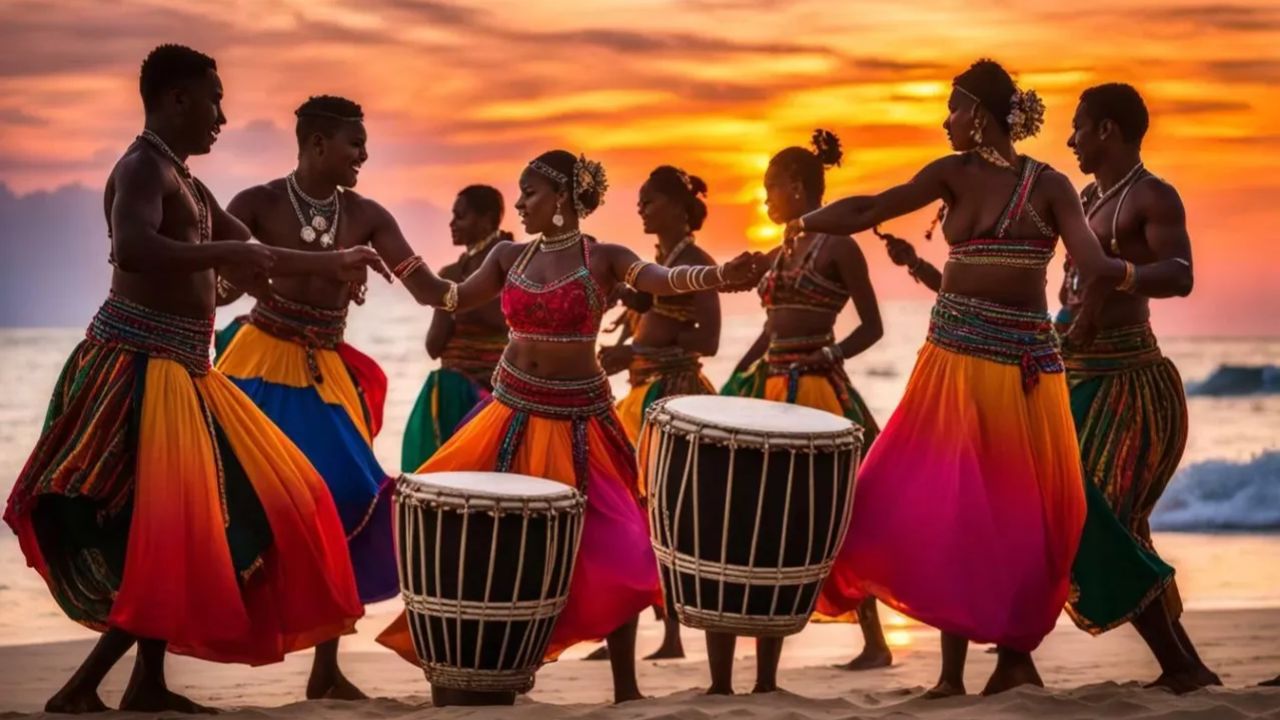
Cape Verdean culture is the result of centuries of contact between African traditions and European influences, shaped by geography, migration, and survival in a challenging island environment. Located in the Atlantic Ocean off the West African coast, Cape Verde developed as a cultural crossroads rather than a single-origin society. Today, its language, music, food, and social customs reflect this blended identity, making Cape Verde culturally distinct from both mainland Africa and Europe.
Origins of a Creole Society
Cape Verde was uninhabited until the 15th century, when Portuguese explorers arrived and established settlements. Soon after, enslaved Africans from the West African coast were brought to the islands. Unlike many colonies where indigenous cultures already existed, Cape Verde became a new society formed entirely through interaction between Africans and Europeans.
Table of Contents
This process led to the emergence of a Creole culture, where traditions merged instead of remaining separate. Over generations, African customs adapted to European systems of religion, governance, and language, while European settlers absorbed African rhythms, food practices, and social norms. The result was not a divided culture, but a shared one.
Language as Cultural Evidence
One of the clearest expressions of Cape Verde’s mixed roots is language. While Portuguese is the official language used in government and education, most Cape Verdeans speak Cape Verdean Creole (Kriolu) in daily life.
Creole is based largely on Portuguese vocabulary but follows African linguistic structures and rhythms. Each island has its own variation, reflecting local history and migration patterns. This dual-language reality reflects Cape Verde’s identity: European in structure, African in spirit, and uniquely its own.
Music and Oral Tradition
Cape Verdean music is internationally recognized as a powerful expression of cultural blending. Genres like morna, coladeira, funaná, and batuque combine African rhythms with European melodic styles.
Morna, often compared to blues or fado, reflects emotional storytelling and longing, influenced by Portuguese musical forms but deeply shaped by African oral traditions. Funaná and batuque, once discouraged under colonial rule, preserve strong African drumming patterns and communal performance styles.
Music has long served as a way for Cape Verdeans to preserve identity, share history, and express collective memory, especially during periods of hardship and migration.
Food and Daily Life
Cape Verdean cuisine is another clear example of cultural fusion. The islands’ limited natural resources forced people to adapt creatively, combining African cooking methods with European ingredients.
The national dish, cachupa, blends African-style slow cooking with European staples like corn and pork. Seafood reflects island geography, while spices and preparation methods trace back to West African traditions. Meals are communal, reflecting African social values, but often structured around European dining customs.
Food in Cape Verde is not just nourishment—it is a reflection of resilience, adaptation, and shared history.
Religion and Social Values
Religion in Cape Verde is predominantly Roman Catholic, introduced by the Portuguese. Churches, festivals, and religious calendars reflect European Christian traditions. However, African spiritual beliefs influenced how religion is practiced, especially in music, celebrations, and community rituals.
Social values emphasize family, respect, and collective responsibility, traits commonly associated with African societies. Extended families, strong neighborhood bonds, and community support systems remain central to daily life, even as modern influences grow.
Migration and the Diaspora Influence
Migration has played a major role in shaping Cape Verdean culture. More Cape Verdeans live abroad than on the islands themselves, particularly in the United States and Europe. This diaspora has reinforced the blend of African and European identity while adding new global influences.
Cape Verdean-Americans, for example, maintain cultural traditions while adapting to U.S. society, further enriching the cultural exchange. Music, language, and food continue to evolve as ideas move between the islands and diaspora communities.
A Culture Built on Adaptation
Cape Verdean culture cannot be defined by a single origin. It is a living example of how African resilience and European structures merged to create something entirely new. From language and music to food and social life, the culture reflects centuries of adaptation, survival, and creativity.
Understanding Cape Verdean culture means recognizing this balance. It is neither purely African nor European, but a Creole identity shaped by history, geography, and the enduring strength of its people.

Joao Fernandes is a climatologist and historian specializing in Cape Verde’s weather patterns and island history, with fifteen years at the national meteorological institute and university research. Based in Praia, Cape Verde, his professional background blends climate analysis, historical archival research, and public policy advising. His expertise covers seasonal wind and rainfall forecasts, climate resilience for coastal communities, and archival studies of colonial-era records. Joao co-authored the book “Climate and Culture of Cape Verde,” published peer-reviewed papers, and advised municipal planners on weather-informed heritage conservation.