

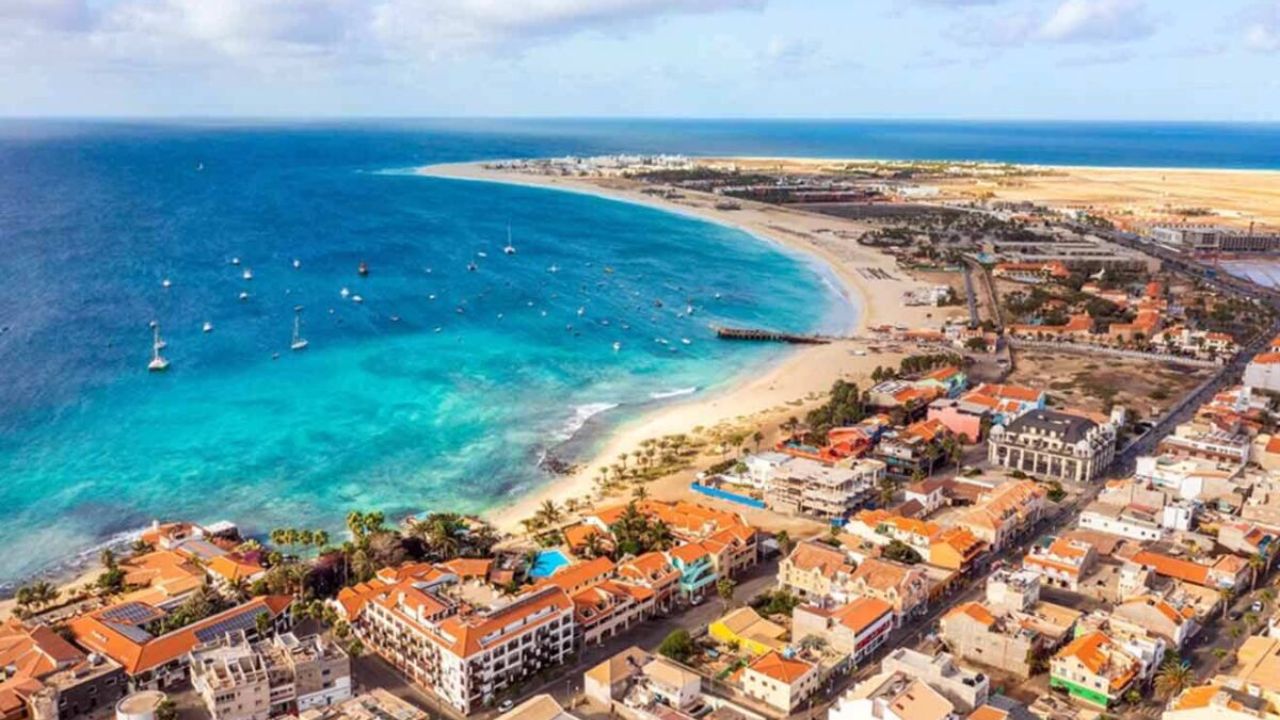
Cape Verde’s climate often surprises first-time visitors. Although the islands are part of Africa, their weather feels very different from what many travelers expect after visiting destinations like Morocco, Kenya, Senegal, or Zanzibar. Instead of dense humidity, heavy rainfall, or dramatic seasonal swings, Cape Verde offers a dry, ocean-cooled climate that is shaped more by the Atlantic than by the African mainland.
Understanding these differences helps travelers choose the right season, pack correctly, and avoid common misconceptions about weather in Africa.
Table of Contents
Atlantic Location Shapes Everything
One of the biggest reasons Cape Verde’s climate stands apart is geography. The islands sit far off the West African coast in the Atlantic Ocean, not on the mainland. This separation means Cape Verde is influenced less by tropical land weather systems and more by stable ocean currents and steady winds.
Many African destinations experience strong continental effects such as monsoon rains, heat trapped over land, or extreme seasonal contrasts. Cape Verde, by contrast, benefits from the Atlantic’s moderating influence, which keeps temperatures relatively stable year-round.
Much Drier Than Most of Africa
When people think of African climates, they often imagine tropical rainforests, savannas with rainy seasons, or equatorial humidity. Cape Verde is very different.
The islands receive very little rainfall, even compared with nearby West African countries. Most years, rain is limited to a short and irregular window between August and October, and even then, showers are brief and localized. Some islands may go months without meaningful rain.
In comparison:
- Coastal West Africa experiences long rainy seasons
- East African destinations often have two wet seasons
- Central Africa receives frequent rainfall year-round
Cape Verde’s dryness gives the islands a semi-arid, desert-like character that feels closer to parts of southern Europe or the Canary Islands than to tropical Africa.
Constant Trade Winds Cool the Islands
Another defining feature of Cape Verde’s climate is the trade winds. These steady Atlantic winds blow across the islands for much of the year, especially from November through June.
While other African destinations may struggle with stagnant heat, Cape Verde benefits from constant air movement that:
- Reduces humidity
- Keeps daytime temperatures comfortable
- Makes beach conditions more pleasant
These winds are also why Cape Verde is popular for wind sports such as kitesurfing and windsurfing, particularly on islands like Sal and Boa Vista.
Mild Temperatures All Year
Many African destinations have large temperature swings between seasons. Desert regions can be extremely hot, while highland areas cool sharply at night. Cape Verde remains relatively mild throughout the year.
Average daytime temperatures usually stay between the low-20s and high-20s Celsius, with little difference between winter and summer. Nights are comfortable rather than cold, and heatwaves are uncommon.
This consistency makes Cape Verde appealing for travelers who want predictable weather without extreme heat or cold.
No True Tropical Climate
Unlike equatorial African destinations, Cape Verde does not have a true tropical climate. There are no lush rainforests, heavy monsoon systems, or year-round humidity. Vegetation is sparse in many areas, and landscapes are shaped by wind, volcanic rock, and dry soil rather than dense plant growth.
This difference affects everything from scenery to clothing choices. Lightweight layers and wind protection matter more than rain gear, which is often unnecessary outside the short rainy window.
Safer From Extreme Weather Events
Cape Verde is also less affected by extreme weather compared to many African regions. Tropical storms and hurricanes are rare, and flooding is uncommon due to low rainfall. While drought is an ongoing challenge for agriculture, travelers face fewer weather-related disruptions.
Other African destinations may experience cyclones, prolonged flooding, or intense seasonal storms that impact travel plans more frequently.
Why This Matters for Travelers
Cape Verde’s unique climate means visitors can plan trips with confidence. There is no strict “avoid this season” rule like in some parts of Africa. Instead, travelers choose timing based on preferences such as wind strength, ocean conditions, or cultural festivals rather than fear of heavy rain.
For travelers used to African destinations with dramatic wet and dry seasons, Cape Verde often feels calmer, cooler, and easier to navigate.
Final Thoughts
Cape Verde’s climate is African in location but Atlantic in character. Dry air, steady winds, mild temperatures, and limited rainfall set the islands apart from much of the continent. This difference is one of the reasons Cape Verde continues to attract visitors who want African culture and history without tropical extremes.
For many travelers, it is precisely this balance—Africa meets Atlantic—that makes Cape Verde so distinctive and appealing.

Joao Fernandes is a climatologist and historian specializing in Cape Verde’s weather patterns and island history, with fifteen years at the national meteorological institute and university research. Based in Praia, Cape Verde, his professional background blends climate analysis, historical archival research, and public policy advising. His expertise covers seasonal wind and rainfall forecasts, climate resilience for coastal communities, and archival studies of colonial-era records. Joao co-authored the book “Climate and Culture of Cape Verde,” published peer-reviewed papers, and advised municipal planners on weather-informed heritage conservation.