

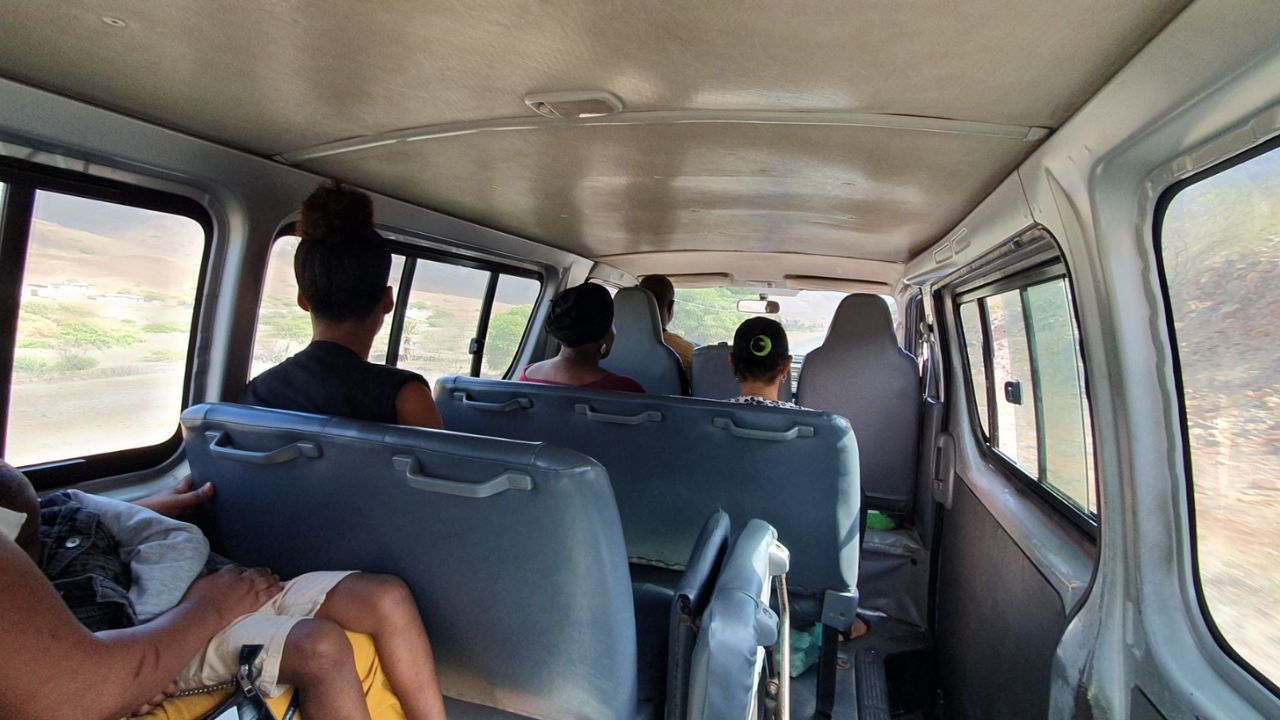
Getting around Cape Verde can feel confusing at first, especially for visitors used to fixed bus timetables and clearly marked routes. One of the most important parts of daily transport across the islands is the aluguers system — a shared, informal, and highly practical way locals travel between towns and villages.
If you are planning to explore beyond resort areas or city centers, understanding aluguers will make your trip smoother, cheaper, and more authentic.
Table of Contents
What Are Aluguers?
Aluguers are shared minibuses or pickup trucks that operate as collective taxis. The word “aluguer” comes from Portuguese and means “rental,” but in Cape Verde it refers to shared public transport vehicles that run along fixed routes.
Unlike formal bus systems in larger countries, aluguers do not operate on strict timetables. Instead, they leave when full. This means departure times depend on passenger demand rather than a printed schedule.
Most aluguers are:
- 12–15 seat minibuses
- Converted vans
- Pickup trucks with covered seating in the back (especially on rural routes)
They are used daily by residents for commuting, shopping trips, school runs, and inter-town travel.
How the Aluguer System Works
The aluguer system is simple once you understand the rhythm.
Vehicles usually depart from a designated stand or town square, often near markets or central roads. Drivers announce destinations, and passengers board until the vehicle fills up. When all seats are taken, the driver leaves.
There are no online bookings or digital tickets. Payment is made directly to the driver in cash, typically at the end of the ride.
Key characteristics of the system include:
- Fixed routes between towns and villages
- Set local fares (generally affordable)
- Flexible departure times based on demand
- Frequent stops to pick up or drop off passengers
If you’re unsure where to find one, simply ask locals for the “paragem de aluguer” (aluguer stop).
Where You’ll Use Aluguers Most
Aluguers are especially important on larger and more populated islands such as Santiago, Santo Antão, and São Vicente.
On Santiago, they connect Praia with smaller inland towns. On Santo Antão, they are essential for reaching hiking trailheads and remote villages. In São Vicente, they operate between Mindelo and surrounding communities.
On more resort-focused islands like Sal and Boa Vista, taxis and hotel transfers are more common, but aluguers still serve local neighborhoods outside tourist zones.
If you plan to explore rural areas, scenic mountain routes, or less-visited towns, aluguers are often the only affordable transport option available.
Cost and Payment
One of the biggest advantages of aluguers is affordability. Fares are typically low compared to private taxis and vary depending on distance.
Short town rides may cost only a few hundred Cape Verdean escudos, while longer inter-town routes cost more but remain budget-friendly.
Important things to remember:
- Carry small cash in local currency (CVE)
- Drivers usually do not accept cards
- Keep your fare ready to avoid delays
Because prices are standardized on most routes, there is rarely negotiation involved.
Advantages of Using Aluguers
For travelers willing to adapt to local systems, aluguers offer several benefits.
They are:
- The most affordable transport option
- Widely available in populated areas
- A great way to experience daily island life
- Flexible for short and medium distances
You’ll often travel alongside residents, which can create opportunities for conversation and cultural insight. For visitors interested in understanding local rhythms beyond resort areas, this is a meaningful experience.
Challenges Tourists Should Know
While practical, aluguers may feel unfamiliar to first-time visitors.
Because vehicles leave only when full, you might wait longer during quiet hours. Comfort can also vary, especially on rural roads where vehicles may be older or roads uneven.
Other considerations include:
- Limited space for large luggage
- No fixed timetable
- Crowded seating during peak hours
If you are traveling with heavy bags or tight schedules, a taxi or rental car may be more suitable.
Safety and Etiquette
Aluguers are widely used by locals and generally considered safe. However, basic travel awareness always applies.
Keep personal belongings close, avoid displaying valuables, and confirm the destination before boarding. If you are unsure, politely ask the driver or another passenger to confirm the route.
Basic etiquette includes:
- Greeting the driver
- Paying the correct fare
- Respecting seating order
- Being patient if stops are frequent
Learning a few Portuguese or Cape Verdean Creole phrases can make the experience smoother.
When to Choose Aluguers vs. Other Transport
Choosing aluguers depends on your travel style.
They are ideal if:
- You want affordable travel
- You are not on a strict timetable
- You are exploring non-tourist areas
- You prefer local experiences
You may prefer taxis or rental cars if:
- You need direct point-to-point travel
- You have limited time
- You are carrying large luggage
- You want more privacy
For many visitors, combining aluguers with taxis and ferries provides the best balance of cost and convenience.
Final Thoughts on Cape Verde’s Aluguer System
Understanding aluguers is key to understanding how Cape Verde moves. This shared transport network reflects the islands’ practical, community-based approach to mobility.
While it may require flexibility and patience, the aluguer system remains one of the most authentic and budget-friendly ways to explore the archipelago.
For travelers willing to adapt, aluguers are not just transport — they are part of the Cape Verde experience itself.

Marta Silva is a travel writer and certified island guide with over twelve years leading small-group tours across Cape Verde. Based in Praia, Cape Verde, her professional background combines on-the-ground guiding, itinerary planning, and hospitality consulting. Her expertise includes island itineraries, public transport logistics, sustainable travel tips, and local culture immersion. Marta authored the practical guidebook “Discovering Santiago” and contributes island guides for regional tourism publications; she has partnered with Cape Verde’s tourism board on community-based tourism initiatives and regular travel-workshops for visiting journalists.