

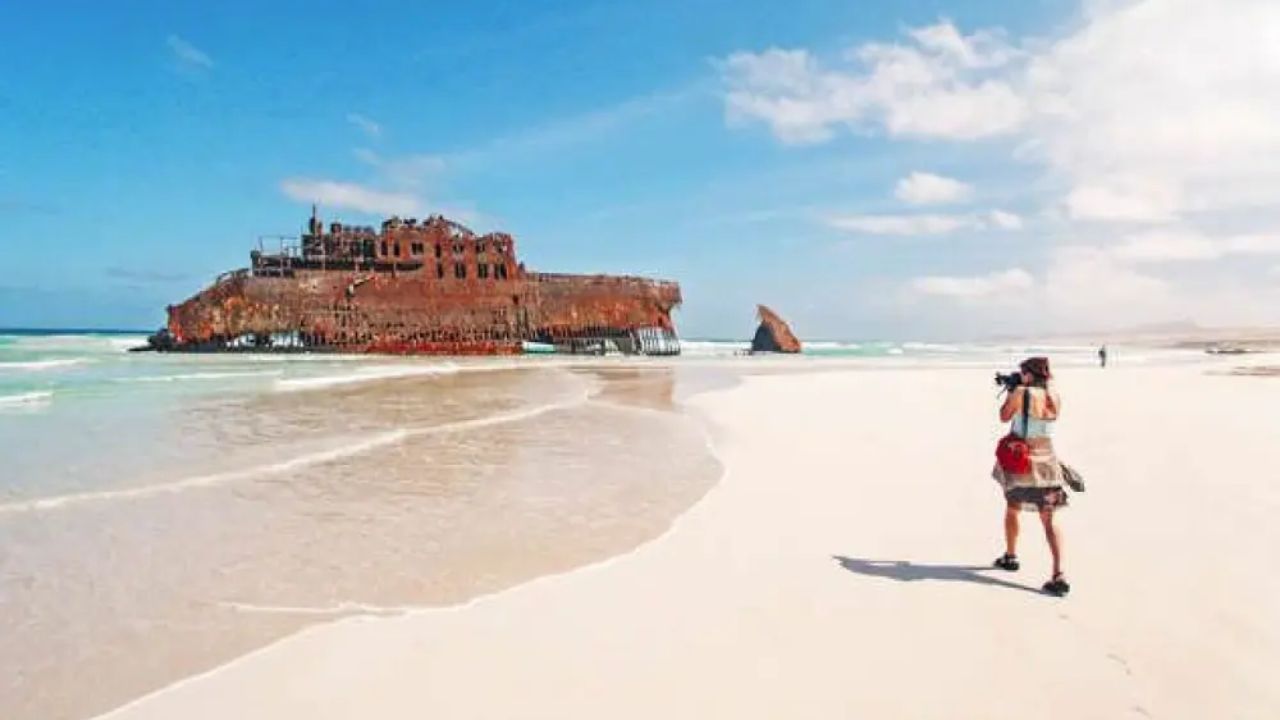
Many travelers expect Cape Verde to feel intensely hot because it sits in the tropics, off the coast of West Africa. Yet visitors often say the opposite: the islands feel breezy, fresh, and noticeably cooler than other tropical destinations at the same latitude. So what makes Cape Verde different?
The answer lies in geography, wind patterns, ocean currents, and the islands’ dry climate. Together, these factors create a tropical environment that feels milder and more comfortable than humid Caribbean or Southeast Asian destinations.
Table of Contents
The Constant Atlantic Trade Winds
One of the biggest reasons Cape Verde feels cooler is the steady presence of northeast trade winds. These winds blow across the Atlantic for much of the year and consistently move air across the islands.
Instead of allowing heat to sit and build up, the wind constantly circulates it away from the body. Even when daytime temperatures reach the high 80s°F (around 30°C), the breeze prevents that heavy, suffocating feeling many travelers associate with tropical heat.
This is especially noticeable on islands like Sal and Boa Vista, where open terrain allows winds to move freely. The result is a climate that feels airy rather than oppressive.
Lower Humidity Compared to Other Tropical Regions
Humidity plays a major role in how hot a place feels. In many tropical countries, high moisture levels in the air trap heat and prevent sweat from evaporating efficiently. That is what creates the sticky, uncomfortable sensation many people dislike.
Cape Verde is much drier. The islands sit within a semi-arid climate zone, which means humidity levels are often lower than in rainforest or monsoon regions. Because the air contains less moisture, sweat evaporates faster, cooling the skin more effectively.
Even when temperatures are similar to other tropical destinations, the lower humidity makes Cape Verde feel significantly more comfortable.
The Cooling Influence of the Atlantic Ocean
Cape Verde is surrounded by the open Atlantic Ocean, and that matters more than many people realize. Ocean currents influence local air temperature and coastal breezes.
Cooler Atlantic waters moderate extreme heat, particularly along the coast where most visitors stay. During the day, sea breezes develop as warm land air rises and cooler ocean air moves in to replace it. This natural cycle helps regulate temperature and reduce the intensity of midday heat.
Unlike landlocked tropical regions, Cape Verde benefits from this constant ocean-driven cooling effect.
A Dry, Desert-Like Landscape
Many of Cape Verde’s islands feature volcanic rock, sandy plains, and sparse vegetation. While deserts are known for extreme heat, they are also known for dry air and large temperature swings between day and night.
Because Cape Verde lacks dense tropical forests, there is less moisture released into the air through vegetation. That reduces humidity levels further and keeps evenings surprisingly comfortable.
After sunset, temperatures often drop noticeably. Nights can feel cool and refreshing rather than warm and sticky, which surprises many first-time visitors.
Seasonal Variations Without Extreme Swings
Cape Verde’s location gives it relatively stable temperatures year-round. Unlike some tropical destinations that experience dramatic wet and dry seasons with heavy humidity spikes, Cape Verde’s climate changes are more subtle.
The warmest months typically fall between late summer and early autumn, while winter months are slightly cooler but still pleasant. Even during hotter periods, the trade winds usually remain active, preventing extreme heat buildup.
This steady pattern helps maintain a comfortable climate rather than sharp seasonal discomfort.
The Harmattan Effect
At certain times of year, particularly between late autumn and early spring, dry air masses known as the Harmattan can influence conditions across West Africa and the Atlantic region.
When this dry air reaches Cape Verde, it can further reduce humidity and slightly soften daytime heat. While visibility may occasionally be affected by fine dust, the overall air remains dry rather than muggy.
This reinforces the islands’ reputation for a mild tropical feel.
Coastal Living Makes a Difference
Most hotels, resorts, and guesthouses in Cape Verde are located near the coast. Coastal positioning maximizes exposure to ocean breezes and minimizes inland heat retention.
Travelers staying by the water will feel the wind more consistently than those in sheltered valleys or mountainous interiors. That coastal setup shapes the perception of Cape Verde’s overall climate, since most visitors experience the islands from breezy seaside locations.
Why It Matters for Travelers
Understanding why Cape Verde feels cooler helps travelers pack appropriately and set realistic expectations. Lightweight clothing is still necessary, but the heat is usually more manageable than in many equatorial destinations.
The combination of trade winds, dry air, ocean influence, and stable temperatures creates a climate that feels balanced rather than extreme. It is tropical, but rarely overwhelming.
For visitors coming from humid summer climates in the United States or Europe, Cape Verde can actually feel refreshing by comparison. The sun is strong, but the air is rarely heavy.
In short, Cape Verde feels cooler not because it is cold, but because natural forces work together to regulate heat efficiently. Wind, ocean, and dryness combine to create one of the most comfortable tropical climates in the Atlantic world.

Joao Fernandes is a climatologist and historian specializing in Cape Verde’s weather patterns and island history, with fifteen years at the national meteorological institute and university research. Based in Praia, Cape Verde, his professional background blends climate analysis, historical archival research, and public policy advising. His expertise covers seasonal wind and rainfall forecasts, climate resilience for coastal communities, and archival studies of colonial-era records. Joao co-authored the book “Climate and Culture of Cape Verde,” published peer-reviewed papers, and advised municipal planners on weather-informed heritage conservation.