

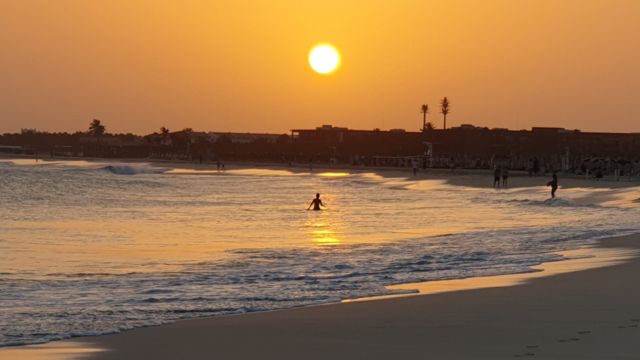
Cape Verde’s climate is one of its biggest attractions. Located in the Atlantic Ocean off the coast of West Africa, the islands enjoy warm temperatures throughout the year with relatively small changes between seasons. However, temperatures from sunrise to sunset do change noticeably during the day, and understanding these patterns helps travelers plan activities more comfortably.
From cool early mornings to warm afternoons and pleasant evenings, Cape Verde offers a balanced daily temperature cycle shaped by ocean breezes, trade winds, and strong sunshine.
Table of Contents
Early Morning Temperatures at Sunrise
Sunrise in Cape Verde usually brings the coolest temperatures of the day. Across most islands, early morning temperatures range between 20°C and 23°C (68°F to 73°F) for much of the year.
In coastal areas like Sal, Boa Vista, and São Vicente, the nearby ocean prevents sharp overnight cooling. Even so, mornings can feel slightly cool, especially during the winter months from December to February. Light winds are common at sunrise, which can add a mild chill, particularly near the shore.
For travelers, early mornings are ideal for:
- Walking and hiking
- Morning photography
- Outdoor workouts
- Breakfast by the beach
A light jacket or long-sleeve layer is often enough during this time, especially in winter.
Temperature Rise During the Morning Hours
As the sun climbs higher, temperatures begin to rise steadily. Between 9:00 AM and 11:00 AM, Cape Verde typically warms into the 24°C to 27°C (75°F to 81°F) range.
This period is often considered the most comfortable part of the day. The sun is bright but not yet intense, and cooling Atlantic breezes help regulate the heat. Visibility is usually excellent, making late mornings perfect for sightseeing, boat trips, and guided tours.
On mountainous islands like Santo Antão and Santiago, inland areas may warm slightly faster than coastal zones, though higher elevations remain cooler.
Afternoon Peak Temperatures
The warmest temperatures in Cape Verde occur from early to mid-afternoon, usually between 1:00 PM and 4:00 PM. During this window, temperatures commonly reach:
- 26°C to 30°C (79°F to 86°F) in winter
- 28°C to 32°C (82°F to 90°F) in summer
Despite these highs, extreme heat is rare. The surrounding ocean and consistent winds prevent the oppressive conditions found in some tropical destinations. That said, direct sunlight can feel strong, particularly on flat, sandy islands like Sal and Boa Vista where shade is limited.
This is the best time for:
- Swimming and beach activities
- Snorkeling and water sports
- Resort lounging
Travelers should use sunscreen, hats, and stay hydrated during afternoon hours.
Late Afternoon Cooling Trend
By late afternoon, temperatures begin to ease. From around 4:30 PM onward, the sun’s intensity softens, and readings gradually drop to 24°C–27°C (75°F–81°F).
Winds often increase slightly during this period, especially on wind-exposed islands. The combination of warm air and cooling breezes makes late afternoon one of the most pleasant times of day. Many locals and visitors plan walks, café visits, and casual outings during these hours.
For photographers, the late afternoon light adds warmth to landscapes without the harsh glare of midday sun.
Evening and Sunset Temperatures
Sunset temperatures in Cape Verde are comfortably warm. As the sun dips below the horizon, temperatures usually fall to 22°C–25°C (72°F–77°F).
Evenings rarely feel cold, but breezes can be noticeable near the coast. In winter months, some travelers prefer a light sweater, especially when dining outdoors or sitting near the water.
Sunset and early evening are ideal for:
- Outdoor dining
- Cultural events and live music
- Strolling along promenades
- Watching the sun set over the Atlantic
Humidity remains low compared to many tropical regions, keeping evenings comfortable.
Nighttime Temperature Stability
After sunset, temperatures continue to cool slowly but remain mild overnight. Most islands settle between 20°C and 23°C (68°F–73°F) at night.
This stable nighttime climate allows for comfortable sleep without heavy air conditioning. Inland and higher-elevation areas can be slightly cooler, while coastal towns stay warmer due to ocean influence.
How Seasons Affect Daily Temperature Changes
While Cape Verde is warm year-round, seasonal differences slightly affect the sunrise-to-sunset range:
- Winter (Dec–Feb): Cooler mornings and evenings, milder afternoons
- Summer (Aug–Oct): Warmer afternoons, slightly higher humidity, warmer nights
Even during the warmest months, daily temperature swings remain moderate and predictable.
Conclusion: What Travelers Should Expect
Sunrise to sunset temperatures in Cape Verde follow a gentle, traveler-friendly pattern. Cool mornings transition into warm afternoons, followed by pleasant evenings that rarely require heavy layers.
This balance makes it easy to plan full days outdoors without extreme weather concerns. Whether you prefer early-morning exploration, afternoon beach time, or sunset dining, Cape Verde’s daily temperature rhythm supports relaxed and enjoyable travel throughout the year.

Marta Silva is a travel writer and certified island guide with over twelve years leading small-group tours across Cape Verde. Based in Praia, Cape Verde, her professional background combines on-the-ground guiding, itinerary planning, and hospitality consulting. Her expertise includes island itineraries, public transport logistics, sustainable travel tips, and local culture immersion. Marta authored the practical guidebook “Discovering Santiago” and contributes island guides for regional tourism publications; she has partnered with Cape Verde’s tourism board on community-based tourism initiatives and regular travel-workshops for visiting journalists.