

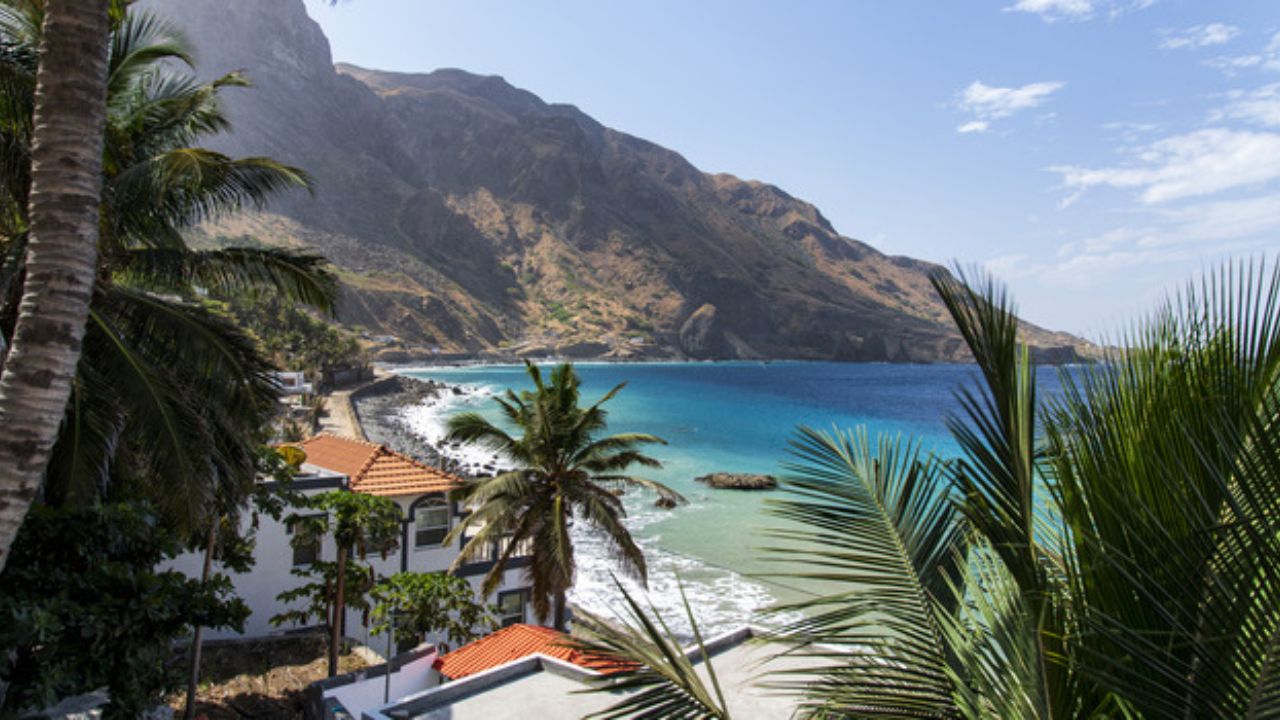
Brava is the smallest inhabited island of Cape Verde, yet it leaves one of the strongest impressions on visitors. Often overlooked in favor of Sal or Boa Vista, Brava offers a completely different side of the archipelago—green hills, misty valleys, and quiet villages where life moves at a gentle pace. Its nickname, “the Island of Flowers,” reflects both its natural beauty and its cultural character.
Where Brava Island Is Located
Brava lies in the southwestern part of Cape Verde, south of Fogo Island. It has no airport, which already sets it apart from most other islands. Travelers reach Brava by ferry from Fogo, usually from the port of São Filipe. This relative isolation has helped preserve the island’s landscapes, traditions, and calm atmosphere.
Table of Contents
Because of its volcanic origins and higher elevation compared to nearby islands, Brava receives more moisture from passing clouds. This plays a major role in shaping its environment.
Why Brava Is Called the Island of Flowers
The nickname “Island of Flowers” comes from Brava’s unusually lush vegetation. While much of Cape Verde is dry and semi-arid, Brava supports a surprising variety of flowers, fruit trees, and greenery. Bougainvillea, hibiscus, jasmine, and wildflowers grow along stone walls, village paths, and terraced hillsides.
Frequent cloud cover and higher humidity allow plants to thrive, especially in sheltered valleys. During certain seasons, the island appears green and colorful in a way that feels almost un-Cape Verdean to first-time visitors. This contrast is exactly what gave Brava its poetic reputation.
Landscape and Natural Beauty
Brava’s terrain is shaped by steep cliffs, volcanic peaks, and fertile valleys. The island does not have long sandy beaches like Sal, but it makes up for that with dramatic coastal views and quiet natural pools. Rocky shorelines drop into deep blue water, creating stunning viewpoints, especially around Fajã d’Água.
Hiking is one of the best ways to experience Brava. Old footpaths connect villages through terraced farmland and misty hills, offering views of both the Atlantic Ocean and the neighboring island of Fogo. The landscape feels intimate and human-scaled, shaped over generations rather than by large resorts.
Main Towns and Village Life
Nova Sintra is Brava’s main town and cultural heart. It sits high in the hills and is known for its colonial-era buildings, flower-filled streets, and peaceful atmosphere. Life here is quiet, with small shops, local cafes, and strong community ties.
Other villages are even smaller and more rural, centered around farming and fishing. Many residents grow fruits, vegetables, and flowers for local use. The pace of life is slow, and visitors often notice how connected people are to their surroundings and to one another.
Cultural Identity and Traditions
Brava has a strong cultural identity shaped by migration and maritime history. Like many Cape Verdean islands, it has deep ties to the diaspora, particularly in the United States. Music, storytelling, and oral traditions remain important parts of daily life.
The island is also known for its poets and writers, who have long drawn inspiration from Brava’s beauty and isolation. This creative heritage adds another layer to its reputation as a gentle, reflective place.
Who Should Visit Brava Island
Brava is ideal for travelers who value nature, quiet, and authenticity over nightlife or luxury resorts. It appeals to hikers, photographers, slow travelers, and those interested in local culture. It is also meaningful for Cape Verdean-Americans looking to reconnect with roots in a less commercialized setting.
This island is not designed for rushed itineraries. Transportation is limited, services are simple, and patience is required. In return, visitors experience a side of Cape Verde that feels deeply personal and unspoiled.
How Brava Compares to Other Cape Verde Islands
Compared to Sal and Boa Vista, Brava is greener, cooler, and far less tourist-oriented. Compared to Santiago, it is smaller and quieter. Unlike Fogo, which is defined by its volcano, Brava is defined by softness—flowers, fog, and flowing hills.
These differences make Brava unique within the archipelago and explain why it holds a special place in Cape Verdean identity.
Final Thoughts on the Island of Flowers
Brava’s beauty is not loud or dramatic at first glance. It reveals itself slowly, through misty mornings, blooming paths, and the warmth of village life. The title “Island of Flowers” is not just about plants—it reflects a softer rhythm of life that continues to survive in Cape Verde’s smallest inhabited island.
For travelers willing to slow down, Brava offers something rare: a quiet, living landscape shaped by nature, history, and care.

Marta Silva is a travel writer and certified island guide with over twelve years leading small-group tours across Cape Verde. Based in Praia, Cape Verde, her professional background combines on-the-ground guiding, itinerary planning, and hospitality consulting. Her expertise includes island itineraries, public transport logistics, sustainable travel tips, and local culture immersion. Marta authored the practical guidebook “Discovering Santiago” and contributes island guides for regional tourism publications; she has partnered with Cape Verde’s tourism board on community-based tourism initiatives and regular travel-workshops for visiting journalists.