

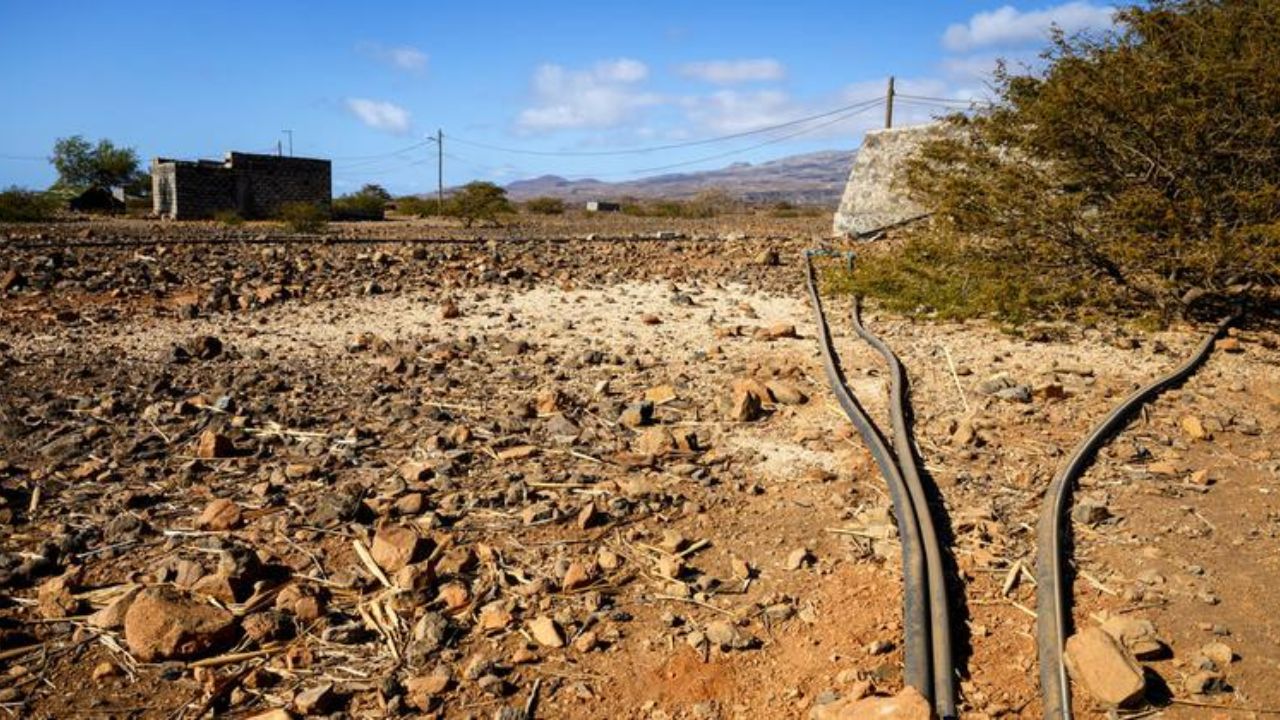
Cape Verde’s history cannot be understood without understanding drought. Long before tourism, migration, and independence shaped the modern nation, repeated cycles of rainfall failure defined daily life across the islands. Drought influenced where people settled, how communities survived, why mass emigration occurred, and how Cape Verde developed its political identity. Unlike sudden disasters, drought in Cape Verde was slow, persistent, and devastating over generations.
Cape Verde’s Fragile Natural Environment
Cape Verde is an Atlantic island nation located off the West African coast, marked by volcanic terrain, thin soils, and scarce freshwater resources. Most islands lack permanent rivers, and rainfall is highly irregular. The short rainy season, usually between August and October, often fails entirely. Even in good years, rain is unevenly distributed and difficult to store due to steep landscapes and porous ground.
Table of Contents
This fragile environment meant that agriculture was always risky. Communities depended heavily on rain-fed crops such as maize and beans, leaving them extremely vulnerable when drought struck.
Early Settlement and the First Food Crises
When the islands were settled in the 15th century under Portuguese rule, Cape Verde was positioned as a maritime hub rather than an agricultural stronghold. Still, the growing population relied on local farming to survive. Early records show that crop failures and food shortages appeared within decades of settlement.
By the 16th and 17th centuries, drought-triggered famines had become recurring events. Colonial authorities often failed to provide relief, prioritizing trade and shipping over local food security. This pattern laid the foundation for long-term hardship and inequality.
The Great Famines of the 18th and 19th Centuries
Drought reached catastrophic levels during several periods in the 18th and 19th centuries. Prolonged rainfall failures led to widespread famine, disease, and mass death. Some estimates suggest that hundreds of thousands of people died across multiple famine cycles, a staggering number given the islands’ small population.
During these crises, food imports were inconsistent, and colonial support was limited. Many rural communities were left to survive on wild plants, roots, or nothing at all. These events became deeply embedded in Cape Verdean collective memory.
Drought and Forced Migration
One of the most lasting effects of drought was migration. As repeated famines made survival uncertain, Cape Verdeans increasingly left the islands in search of work and stability. Migration routes developed toward other parts of Africa, Europe, and especially the United States.
This movement was not only economic but also a survival strategy shaped directly by climate stress. Over time, migration became a defining feature of Cape Verdean identity, creating a global diaspora that remains closely connected to the islands today.
Colonial Neglect and Social Inequality
Drought exposed and intensified inequalities under colonial rule. Relief efforts often favored urban centers or elites, while rural populations suffered the worst effects. Forced labor, food rationing, and delayed aid deepened resentment toward colonial administration.
Many historians argue that the failure to address drought impacts responsibly contributed to growing political awareness and resistance. Environmental hardship made colonial neglect visible and impossible to ignore.
Drought and the Road to Independence
By the mid-20th century, drought continued to shape political thinking. Severe droughts in the 1940s and 1950s once again caused famine and loss of life, reinforcing demands for self-governance and accountability.
Leaders of the independence movement emphasized food security, dignity, and the right to survive on one’s own land. Environmental suffering became part of the broader argument for independence, achieved in 1975.
Modern Responses and Lessons Learned
After independence, Cape Verde invested heavily in drought mitigation strategies. These included dam construction, desalination plants, reforestation, terracing, and international cooperation. While drought remains a challenge, its human impact has been significantly reduced.
The country’s experience has also shaped its cautious approach to climate change. Cape Verde understands that environmental resilience is not optional but essential for national survival.
Conclusion
Drought is not just a background condition in Cape Verde’s history; it is a central force that shaped settlement patterns, migration, political movements, and national identity. From early colonial famines to modern climate adaptation, drought influenced how Cape Verdeans lived, resisted, moved, and rebuilt.
Understanding this history provides deeper insight into the resilience of Cape Verdean society and the strong ties between the islands and their global diaspora. The story of drought in Cape Verde is ultimately a story of endurance, adaptation, and collective memory.

Joao Fernandes is a climatologist and historian specializing in Cape Verde’s weather patterns and island history, with fifteen years at the national meteorological institute and university research. Based in Praia, Cape Verde, his professional background blends climate analysis, historical archival research, and public policy advising. His expertise covers seasonal wind and rainfall forecasts, climate resilience for coastal communities, and archival studies of colonial-era records. Joao co-authored the book “Climate and Culture of Cape Verde,” published peer-reviewed papers, and advised municipal planners on weather-informed heritage conservation.