

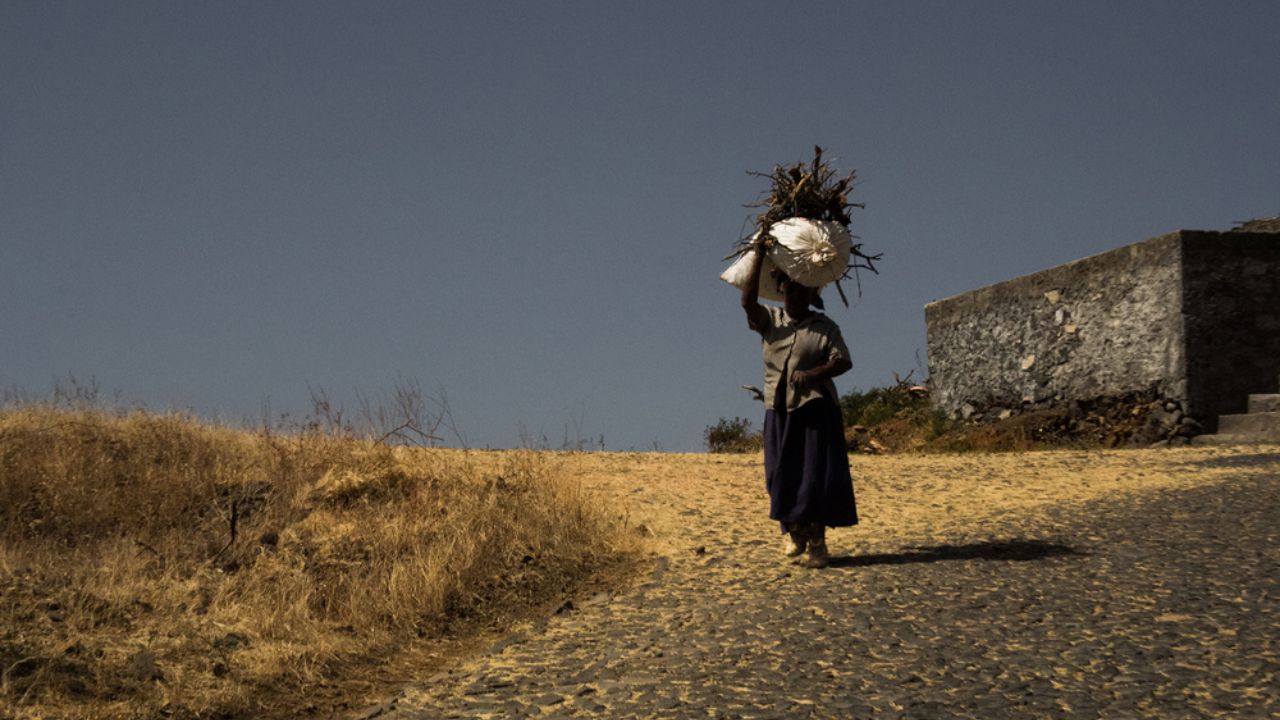
Fogo Island is one of Cape Verde’s most striking and dramatic islands, defined by the towering presence of Pico do Fogo, an active stratovolcano that dominates both the landscape and daily life. While many visitors come for hiking or wine tasting, the real story of Fogo is found in its villages—communities that have learned to live, adapt, and thrive in the shadow of a volcano.
Life here is shaped by resilience, tradition, and a deep connection to the land. For travelers and students alike, Fogo’s villages offer a rare look at how people coexist with a powerful natural force.
Table of Contents
The Central Role of Pico do Fogo
At nearly 2,830 meters high, Pico do Fogo is the highest point in Cape Verde and one of the most active volcanoes in the Atlantic region. Its eruptions, most recently in 2014–2015, have repeatedly reshaped nearby settlements.
Rather than abandoning the area, many residents rebuild and return. Volcanic soil is extremely fertile, making it ideal for farming grapes, coffee, and fruit. This balance between risk and reward defines village life on Fogo, where volcanic activity is seen not only as a threat but also as a source of livelihood.
Chã das Caldeiras: Life Inside the Crater
The most famous village on Fogo is Chã das Caldeiras, located inside the volcanic caldera itself. Surrounded by lava fields and blackened slopes, it is one of the most unusual inhabited places in the world.
Homes here are built from volcanic stone, blending into the landscape. Residents grow grapes for Fogo’s renowned wine, cultivate apples and pomegranates, and raise livestock on mineral-rich ground. After eruptions, entire sections of the village have been buried under lava, yet many families choose to rebuild nearby rather than relocate permanently.
Living in Chã das Caldeiras requires constant awareness. Evacuation plans, monitoring systems, and community coordination are part of everyday reality.
São Filipe: Colonial Roots and Island Life
São Filipe, the island’s main town, sits safely on the western coast, away from immediate volcanic danger. Known for its colonial-era houses, known locally as sobrados, the town serves as Fogo’s administrative, cultural, and economic center.
Many villagers from inland areas maintain family ties in São Filipe, moving between rural and urban life. The town provides schools, healthcare, markets, and transport links while preserving strong cultural traditions, including music, festivals, and local cuisine.
São Filipe reflects a slower, community-oriented rhythm that contrasts with larger tourist hubs elsewhere in Cape Verde.
Rural Villages and Agricultural Traditions
Beyond the caldera and the capital, Fogo is dotted with small rural villages such as Mosteiros, Cova Figueira, and Achada Grande. These communities depend heavily on agriculture, fishing, and local trade.
Terraced farming is common, helping villagers grow crops on steep slopes while conserving water in an island with limited rainfall. Families often work multiple small plots rather than large farms, passing knowledge down through generations.
Community bonds are strong. Neighbors share labor during planting and harvest seasons, and social life revolves around churches, schools, and local gatherings.
Culture Shaped by Risk and Renewal
Living near an active volcano has shaped Fogo’s culture in subtle but powerful ways. There is a strong sense of impermanence, but also optimism. Homes, vineyards, and even roads may be destroyed, yet rebuilding is viewed as a natural cycle rather than a failure.
Music, storytelling, and oral history play an important role in preserving collective memory of past eruptions. Elders recount experiences that help younger generations understand both the dangers and benefits of volcanic life.
Visiting Fogo’s Villages Respectfully
For visitors, Fogo’s villages are not attractions in the usual sense. They are living communities. Travelers are encouraged to respect local customs, ask permission before photographing people or homes, and support local businesses whenever possible.
Staying in family-run guesthouses, hiring local guides, and purchasing locally produced wine or crafts help ensure tourism benefits residents directly.
A Life Defined by the Volcano
Fogo Island’s villages represent one of the most compelling examples of human adaptation in Cape Verde. Here, the volcano is not just a landmark—it is a neighbor, a provider, and a constant reminder of nature’s power.
Living in the shadow of Pico do Fogo requires courage, flexibility, and deep-rooted community ties. For those who take the time to understand these villages, Fogo offers more than scenery—it offers perspective on resilience and coexistence.

Marta Silva is a travel writer and certified island guide with over twelve years leading small-group tours across Cape Verde. Based in Praia, Cape Verde, her professional background combines on-the-ground guiding, itinerary planning, and hospitality consulting. Her expertise includes island itineraries, public transport logistics, sustainable travel tips, and local culture immersion. Marta authored the practical guidebook “Discovering Santiago” and contributes island guides for regional tourism publications; she has partnered with Cape Verde’s tourism board on community-based tourism initiatives and regular travel-workshops for visiting journalists.