

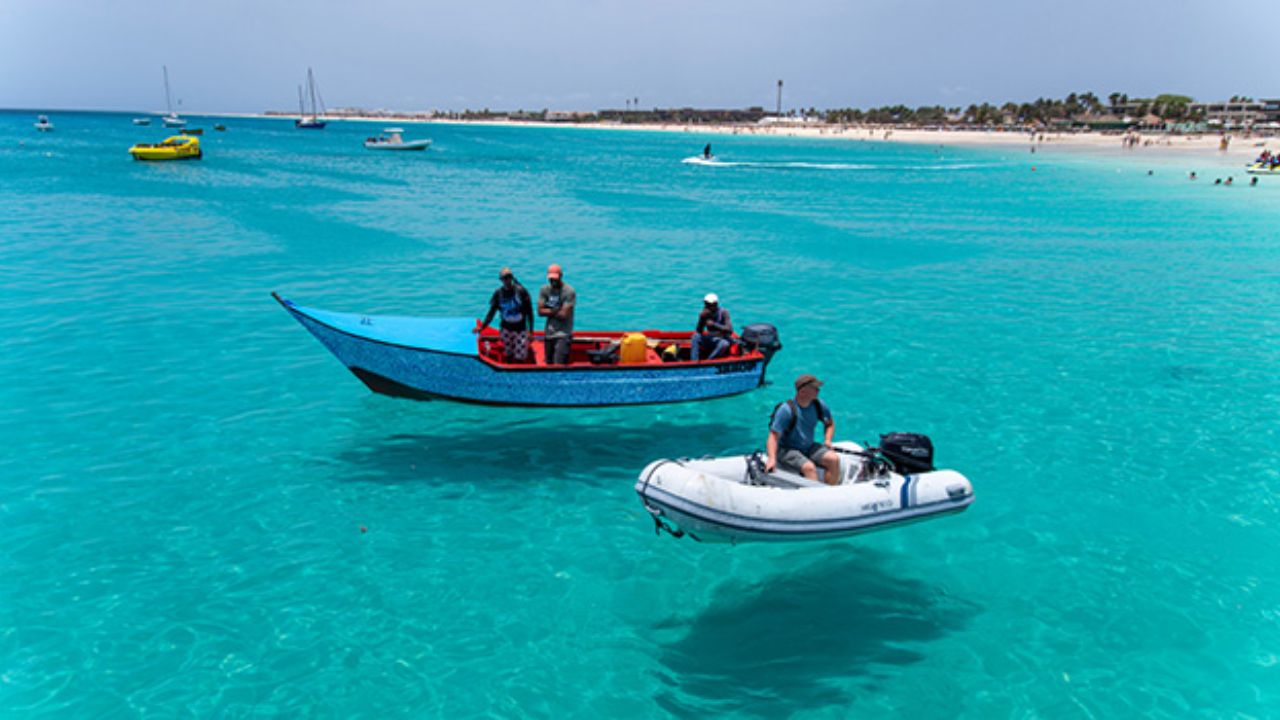
Cape Verde’s reputation as one of Africa’s most politically stable countries is not accidental. While leadership choices, institutions, and civic culture all matter, geography has played a quiet but decisive role. The physical location, island structure, climate, and isolation of Cape Verde have shaped its politics in ways that reduced conflict, encouraged compromise, and strengthened long-term stability.
An Island Nation Far From Regional Conflicts
Cape Verde sits in the Atlantic Ocean, hundreds of kilometers off the West African coast. This physical separation from the mainland insulated the country from many regional conflicts that affected neighboring states during the Cold War and post-independence periods.
Table of Contents
While mainland West Africa experienced civil wars, border disputes, and military coups, Cape Verde’s distance limited spillover effects. Armed groups, refugee flows, and cross-border insurgencies that destabilized other nations were far less likely to reach an isolated island chain. Geography acted as a natural buffer, giving Cape Verde space to develop its own political path without constant external shocks.
Small Territory, Manageable Governance
Cape Verde’s relatively small land area and limited population made governance more manageable after independence. Leaders could focus on national cohesion rather than controlling vast territories or remote border regions.
Smaller geographic scale reduced the likelihood of separatist movements and made state presence more visible. Government institutions, public services, and electoral processes were easier to administer across the islands compared to large, landlocked countries with difficult terrain. This contributed to higher political accountability and stronger trust between citizens and the state.
Limited Natural Resources Reduced Conflict Incentives
Unlike many African states rich in oil, diamonds, or minerals, Cape Verde has few exploitable natural resources. From a purely economic perspective, this was a disadvantage. Politically, however, it reduced incentives for resource-driven conflict.
There were no high-value resources to fight over, no extraction zones controlled by rival factions, and no “resource curse” pressures that often distort governance. Instead, survival required cooperation, planning, and investment in human capital. Geography forced political leaders to prioritize stability, education, and diplomacy over militarization.
Climate Constraints Encouraged Cooperation
Cape Verde’s arid climate and limited freshwater supply shaped political behavior. Frequent droughts historically threatened food security and economic survival, making collective problem-solving essential.
Rather than fueling competition between regions, environmental constraints pushed leaders toward national coordination and external partnerships. Managing scarce resources required long-term planning, foreign aid cooperation, and institutional continuity. Political instability would have made survival harder, reinforcing incentives to maintain order and consensus.
Maritime Orientation and Global Outlook
As an island nation, Cape Verde developed a maritime identity early in its history. Trade routes, ports, and migration shaped its worldview more than land borders or territorial disputes.
This ocean-facing orientation encouraged diplomacy, neutrality, and openness rather than militarized nationalism. Political elites understood that stability was essential for maintaining trade, tourism, and international relationships. Geography encouraged outward-looking governance instead of inward conflict.
Diaspora Geography Strengthened Democratic Norms
Geography also shaped migration patterns. With limited land and resources, large portions of the population migrated abroad, particularly to Europe and the United States. This created a strong diaspora with economic and cultural influence.
Remittances became vital to the economy, but so did ideas. Exposure to democratic systems abroad reinforced expectations of peaceful transitions, free elections, and civilian rule at home. Geography-driven migration indirectly strengthened political norms that favored stability.
No Strategic Chokepoints, Less External Interference
Cape Verde’s location, while important for shipping, did not place it at the center of major geopolitical rivalries after independence. It lacked land borders, military chokepoints, or contested territories that might attract prolonged foreign intervention.
This reduced pressure from competing powers seeking control or influence. Geography allowed Cape Verde to pursue a relatively neutral foreign policy, minimizing proxy conflicts and external manipulation that destabilized other states.
Geography as a Foundation, Not a Guarantee
Geography alone does not create political stability. Poor leadership can destabilize any country, regardless of location. In Cape Verde’s case, geography created conditions that favored cooperation, restraint, and institutional development, but human decisions made the difference.
Island isolation reduced conflict exposure, limited resources discouraged power struggles, and environmental constraints rewarded long-term planning. Together, these geographic factors shaped incentives that supported stable governance over decades.
Conclusion
Cape Verde’s political stability is deeply connected to its geography. Distance from conflict zones, small scale, lack of resource competition, environmental challenges, and an outward-looking maritime identity all shaped political behavior. Geography did not eliminate risk, but it narrowed the paths available to leaders and citizens alike, making stability the most practical and sustainable choice.

Joao Fernandes is a climatologist and historian specializing in Cape Verde’s weather patterns and island history, with fifteen years at the national meteorological institute and university research. Based in Praia, Cape Verde, his professional background blends climate analysis, historical archival research, and public policy advising. His expertise covers seasonal wind and rainfall forecasts, climate resilience for coastal communities, and archival studies of colonial-era records. Joao co-authored the book “Climate and Culture of Cape Verde,” published peer-reviewed papers, and advised municipal planners on weather-informed heritage conservation.