

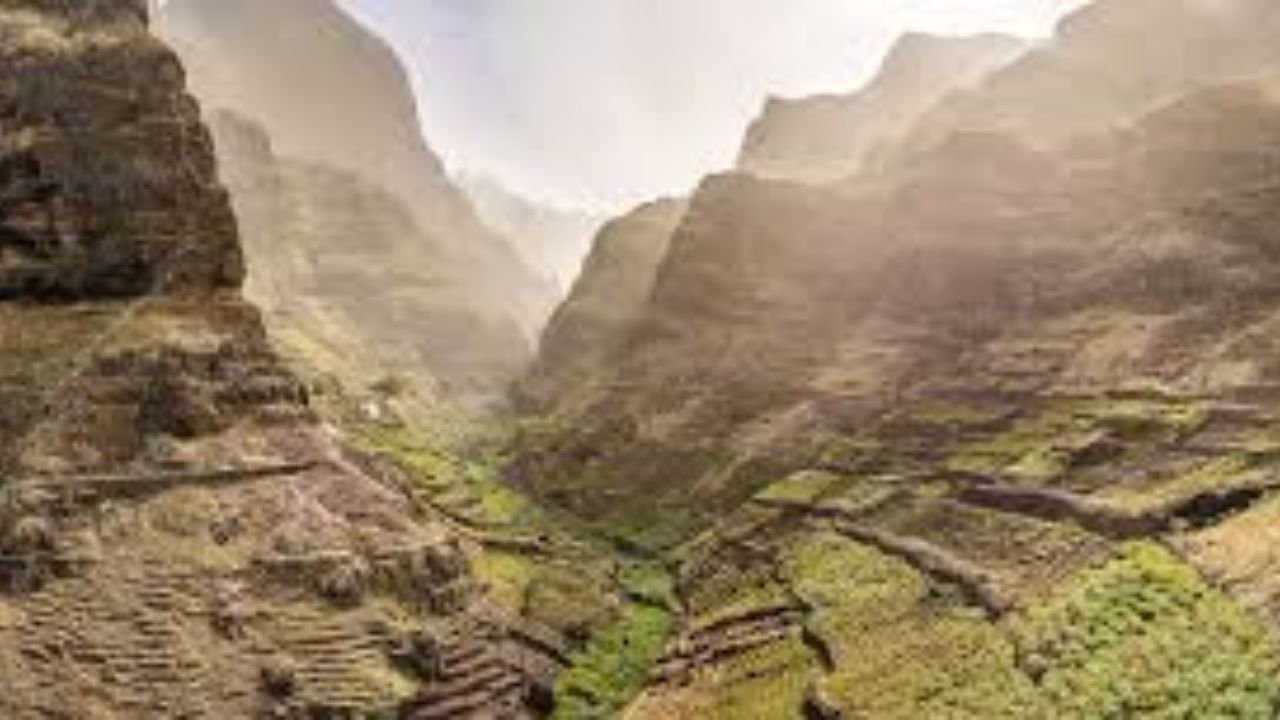
Santo Antão is widely considered the best island in Cape Verde for hiking. Unlike the flat, resort-focused islands, Santo Antão is defined by steep volcanic mountains, deep green valleys, terraced farms, and remote villages connected by historic footpaths. Hiking here is not just about scenery; it is how people have moved between communities for generations. Trails often pass homes, fields, and local shops, making every walk a cultural experience as well as a physical one.
Understanding Santo Antão’s Landscape
The island’s dramatic terrain was shaped by volcanic activity and erosion over thousands of years. Sharp ridges drop into fertile valleys where sugarcane, bananas, papaya, and coffee grow. The north and northeast sides are greener due to higher rainfall, while the south is drier and more rugged. Elevation changes are significant, which means many hikes involve long descents or climbs rather than flat walks.
Table of Contents
Paul Valley: Lush Trails and Village Life
Paul Valley is the most famous hiking area on the island and often the first stop for visitors. The trails here wind through banana groves, sugarcane fields, and small villages with brightly painted houses. Many hikes descend from the cooler highlands down to the coastal town of Paul, offering continuous views and changing vegetation. Paul Valley trails are ideal for hikers who want moderate difficulty combined with strong cultural immersion.
Ribeira da Torre: Dramatic Views and Steep Paths
Ribeira da Torre is known for its towering cliffs and dramatic landscapes. The paths here can be steeper and more demanding, but the reward is wide valley views and fewer crowds. Traditional stone paths connect small settlements and farms. This area is well suited for hikers with some experience who are comfortable with uneven terrain and longer climbs.
Cova Crater to Paul: The Classic Route
Cova Crater to Paul is the most iconic hike on the island. Starting from the high-altitude crater, hikers descend thousands of feet through cloud forests and cultivated terraces into Paul Valley. The temperature often changes noticeably along the way, so layering is important. This route clearly shows how altitude shapes life on the island, from pine trees at the top to tropical crops below.
Remote Villages and Coastal Paths
Beyond the famous valleys, Santo Antão offers routes to remote villages that see few visitors. Coastal trails connect fishing communities and pass cliffs that drop directly into the Atlantic. These hikes feel more isolated and are ideal for travelers seeking quiet and authenticity. Services are limited, so planning ahead for water, food, and transport is essential.
Trail Conditions and Difficulty Levels
Most trails on Santo Antão are stone-paved or dirt paths built long before modern tourism. They can be uneven, narrow, and slippery after rain. Difficulty is usually defined by elevation change rather than distance. Even short hikes can be physically demanding due to steep ascents or descents. Trekking poles are useful, especially on longer routes.
Best Time of Year for Hiking
The best months for hiking are generally from November to April, when temperatures are cooler and rainfall is lower. During late summer and early autumn, heat and humidity can make hikes more challenging, though the valleys are at their greenest. Morning starts are recommended year-round to avoid midday sun.
Guided vs Independent Hiking
Independent hiking is possible on many well-marked routes, especially in Paul Valley. However, local guides add value by explaining agricultural practices, village life, and trail options that maps may not show. Hiring a guide also supports the local economy and can improve safety on longer or less-traveled routes.
Practical Tips for Santo Antão Hikers
Wear sturdy hiking shoes with good grip, carry more water than you think you need, and bring sun protection even on cloudy days. Cash is useful in small villages where cards are not accepted. Respect local customs, greet people you pass on the trail, and stay on established paths to protect the landscape.
Santo Antão rewards hikers who take their time. Its trails are not just routes through mountains, but pathways into the everyday life, history, and resilience of Cape Verde’s most mountainous island.

Marta Silva is a travel writer and certified island guide with over twelve years leading small-group tours across Cape Verde. Based in Praia, Cape Verde, her professional background combines on-the-ground guiding, itinerary planning, and hospitality consulting. Her expertise includes island itineraries, public transport logistics, sustainable travel tips, and local culture immersion. Marta authored the practical guidebook “Discovering Santiago” and contributes island guides for regional tourism publications; she has partnered with Cape Verde’s tourism board on community-based tourism initiatives and regular travel-workshops for visiting journalists.