

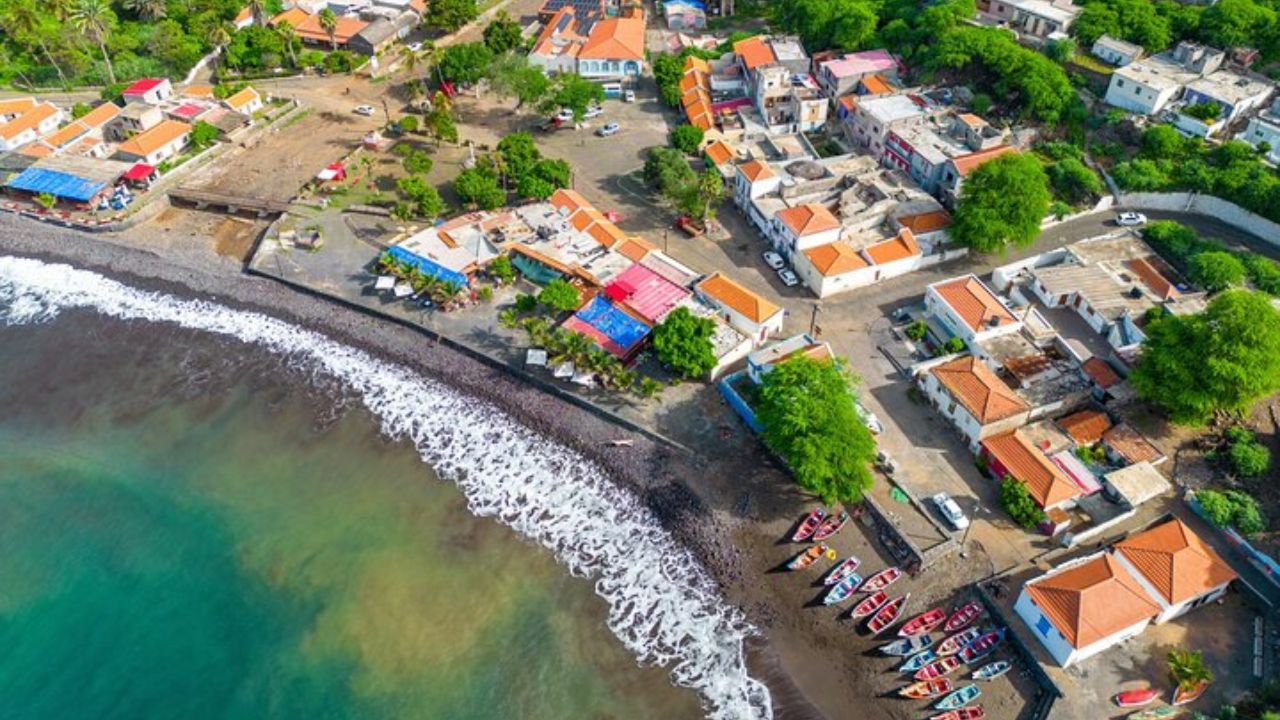
Cidade Velha, located on the island of Santiago in Cape Verde, holds a unique place in world history. Known during the colonial era as Ribeira Grande, it is widely recognized as the first permanent European city built in the tropics. Today, its quiet streets and historic ruins tell a powerful story of exploration, trade, slavery, and cultural exchange that shaped the Atlantic world.
Designated a UNESCO World Heritage Site in 2009, Cidade Velha is not just a tourist stop but a living historical landscape that helps visitors understand how Cape Verde became a crossroads between Africa, Europe, and the Americas.
Table of Contents
Where Cidade Velha Is Located
Cidade Velha sits on the southern coast of Santiago Island, about 15 kilometers west of Praia, Cape Verde’s capital. The town lies in a fertile valley surrounded by volcanic hills, with the Atlantic Ocean opening directly in front of it. This geography made it an ideal settlement point for early Portuguese explorers and traders in the 15th century.
Its sheltered harbor allowed ships traveling between Europe, West Africa, and the Americas to stop for supplies, repairs, and trade, helping the town grow rapidly during its early centuries.
The Founding of the First Tropical European City
Cidade Velha was founded in 1462 by Portuguese settlers, making it the first European settlement established in the tropics. At the time, Cape Verde had no indigenous population, which allowed the Portuguese to build a colonial city without displacement conflicts common elsewhere.
The settlement quickly became an administrative and commercial center for Portugal’s Atlantic operations. Ribeira Grande served as a hub for maritime trade, religious administration, and early colonial governance, setting a model later repeated across tropical colonies.
Cidade Velha and the Atlantic Slave Trade
One of the most important and difficult aspects of Cidade Velha’s history is its role in the transatlantic slave trade. The city became a major point where enslaved Africans were brought from the mainland before being transported to Europe, Brazil, and the Caribbean.
This system shaped Cape Verde’s population, culture, and identity. Over time, African, European, and later American influences blended, forming the Creole society that defines Cape Verde today. Cidade Velha stands as a reminder of this painful history and its lasting impact on global demographics and culture.
Historic Landmarks That Still Remain
Despite centuries of decline, several key monuments in Cidade Velha still stand and attract visitors from around the world.
The Pelourinho, or pillory, located in the town square, symbolized colonial justice and punishment. It is one of the most powerful reminders of slavery-era authority.
The Sé Cathedral, once one of the richest churches in Africa, now lies in ruins but reflects the importance of religion and wealth during the city’s peak.
Above the town sits Fortaleza Real de São Filipe, built in the late 16th century to defend against pirate attacks. From the fort, visitors can see sweeping views of the valley and coastline, understanding why defense was critical in an era of constant maritime conflict.
Decline and Abandonment
Cidade Velha’s importance declined sharply in the 17th century. Repeated pirate attacks, including raids by English and French privateers, weakened the settlement. At the same time, trade routes shifted, and administrative power gradually moved to Praia.
By the 18th century, Ribeira Grande had lost much of its population and influence, leaving behind ruins rather than a thriving colonial capital. This decline unintentionally helped preserve the city’s historical layout, allowing modern visitors to see an authentic early colonial town rather than a heavily modernized one.
UNESCO World Heritage Recognition
In 2009, Cidade Velha was officially recognized as a UNESCO World Heritage Site for its outstanding universal value. UNESCO highlighted the city’s role in early European expansion, the Atlantic slave trade, and cultural exchange between continents.
This recognition helped boost preservation efforts and increased awareness of Cidade Velha’s global significance. Today, restoration projects focus on protecting ruins while keeping the town accessible and meaningful for local residents.
Why Cidade Velha Matters Today
Cidade Velha is more than an archaeological site. It represents the beginning of globalization in the tropics, showing how trade, migration, and cultural blending reshaped societies across oceans.
For Cape Verdeans, it is a place of memory and identity. For visitors, it offers a rare chance to walk through the earliest chapter of tropical European settlement and reflect on both its achievements and injustices.
Visiting Cidade Velha provides context for understanding Cape Verde’s culture, resilience, and role in world history—making it one of the most important historical sites not just in Cape Verde, but in the entire Atlantic world.

Marta Silva is a travel writer and certified island guide with over twelve years leading small-group tours across Cape Verde. Based in Praia, Cape Verde, her professional background combines on-the-ground guiding, itinerary planning, and hospitality consulting. Her expertise includes island itineraries, public transport logistics, sustainable travel tips, and local culture immersion. Marta authored the practical guidebook “Discovering Santiago” and contributes island guides for regional tourism publications; she has partnered with Cape Verde’s tourism board on community-based tourism initiatives and regular travel-workshops for visiting journalists.