

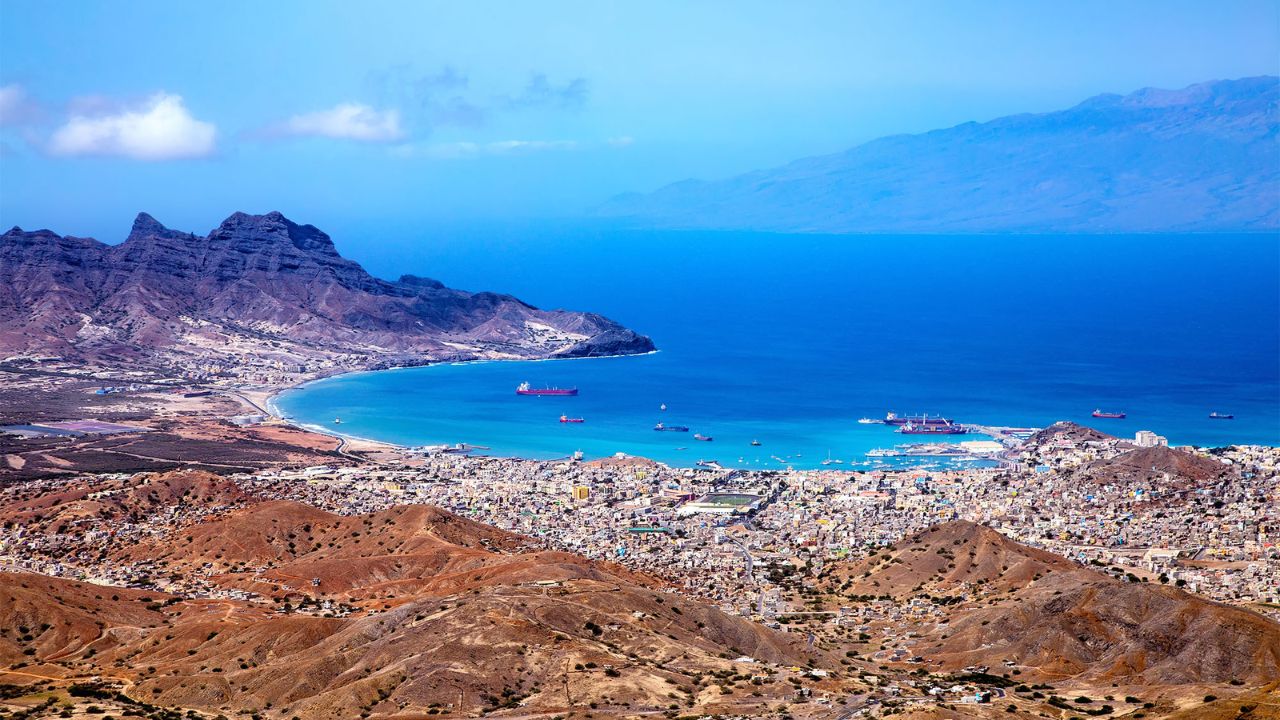
Cape Verde is often described as one of the world’s earliest and most complete Creole societies. This identity did not emerge suddenly or naturally over centuries of isolated development. Instead, it was shaped by forced migration, maritime trade, colonial rule, and cultural adaptation. Understanding how Cape Verde became a Creole society requires looking at its origins as an uninhabited archipelago and the historical forces that brought diverse peoples together under unequal conditions.
An Uninhabited Starting Point
Before the 15th century, the islands that now form Cape Verde had no permanent human population. When Portuguese sailors arrived in the 1460s, they encountered an empty landmass strategically positioned along Atlantic trade routes. This absence of indigenous societies made Cape Verde fundamentally different from most parts of Africa and the Americas. There was no existing culture to dominate or replace. Everything that followed was built from scratch, under colonial control.
Table of Contents
Portuguese Settlement and Colonial Structure
The Portuguese crown established settlements primarily to support Atlantic navigation and trade. Early European settlers included administrators, merchants, sailors, and landowners. However, Cape Verde was never a large destination for European families. The population imbalance between European men and women would become a defining factor in the islands’ social formation.
Portuguese institutions, language, and Catholicism formed the official framework of colonial life. Yet these elements could not function in isolation. The colony depended heavily on enslaved labor, which transformed Cape Verde from a simple outpost into a complex, multi-ethnic society.
The Role of the Transatlantic Slave Trade
From the late 15th century onward, Cape Verde became a critical node in the transatlantic slave trade. Enslaved Africans from different regions of West and Central Africa were brought to the islands. Some were held temporarily before being transported onward, while others remained permanently.
These enslaved populations spoke different languages, practiced varied belief systems, and came from distinct cultural backgrounds. Forced to coexist under colonial domination, they began to develop shared modes of communication and survival. This interaction between Africans and Europeans laid the foundation for Creole culture.
Language as the Core of Creole Identity
One of the most enduring outcomes of this cultural blending was the emergence of Cape Verdean Creole (Kriolu). Based largely on Portuguese vocabulary but deeply influenced by African grammar and expression, Creole developed as a practical language of everyday life.
While Portuguese remained the official language of administration, religion, and education, Creole became the language of the home, the market, and the street. Over time, it evolved into multiple island-specific variants, reflecting local histories and patterns of settlement. Language became a marker of shared identity that transcended legal status or ancestry.
Social Mixing and Cultural Adaptation
Unlike plantation societies with rigid racial segregation, Cape Verde developed a more fluid social structure, though inequality remained deeply embedded. Relationships between European men and African women were common, resulting in a growing mixed-heritage population.
This population did not simply inherit European or African cultures intact. Instead, customs blended and adapted. Foodways combined Old World and African ingredients. Music absorbed African rhythms and European forms. Religious practices merged Catholic traditions with African spiritual elements. Over generations, these adaptations produced a culture that was neither fully European nor African, but distinctly Cape Verdean.
Geography, Hardship, and Shared Experience
Cape Verde’s harsh climate played an important role in shaping its Creole society. Droughts, famine, and limited natural resources affected everyone, regardless of background. Survival required cooperation, resilience, and adaptation.
These shared hardships fostered a collective identity rooted in endurance and migration. Emigration became a defining feature of Cape Verdean life, reinforcing cultural ties across continents and strengthening the sense of a people shaped by movement rather than territory alone.
From Colonial Society to Creole Nation
By the 19th and early 20th centuries, a distinct Creole consciousness had emerged. Intellectuals, musicians, and writers began articulating a Cape Verdean identity grounded in mixed heritage, language, and shared history. This cultural awareness later fed into political movements that culminated in independence in 1975.
Rather than rejecting its mixed origins, Cape Verde embraced Creole identity as the foundation of nationhood. Today, Creole society is not seen as a byproduct of colonialism alone, but as a source of cultural strength and continuity.
Conclusion
Cape Verde became a Creole society through a unique convergence of historical forces: uninhabited land, colonial settlement, the slave trade, cultural mixing, environmental hardship, and migration. Out of inequality and displacement emerged a shared language, culture, and worldview. Creole identity in Cape Verde is not merely about mixture, but about adaptation, resilience, and the creation of something new from complex and often painful origins.

Joao Fernandes is a climatologist and historian specializing in Cape Verde’s weather patterns and island history, with fifteen years at the national meteorological institute and university research. Based in Praia, Cape Verde, his professional background blends climate analysis, historical archival research, and public policy advising. His expertise covers seasonal wind and rainfall forecasts, climate resilience for coastal communities, and archival studies of colonial-era records. Joao co-authored the book “Climate and Culture of Cape Verde,” published peer-reviewed papers, and advised municipal planners on weather-informed heritage conservation.