

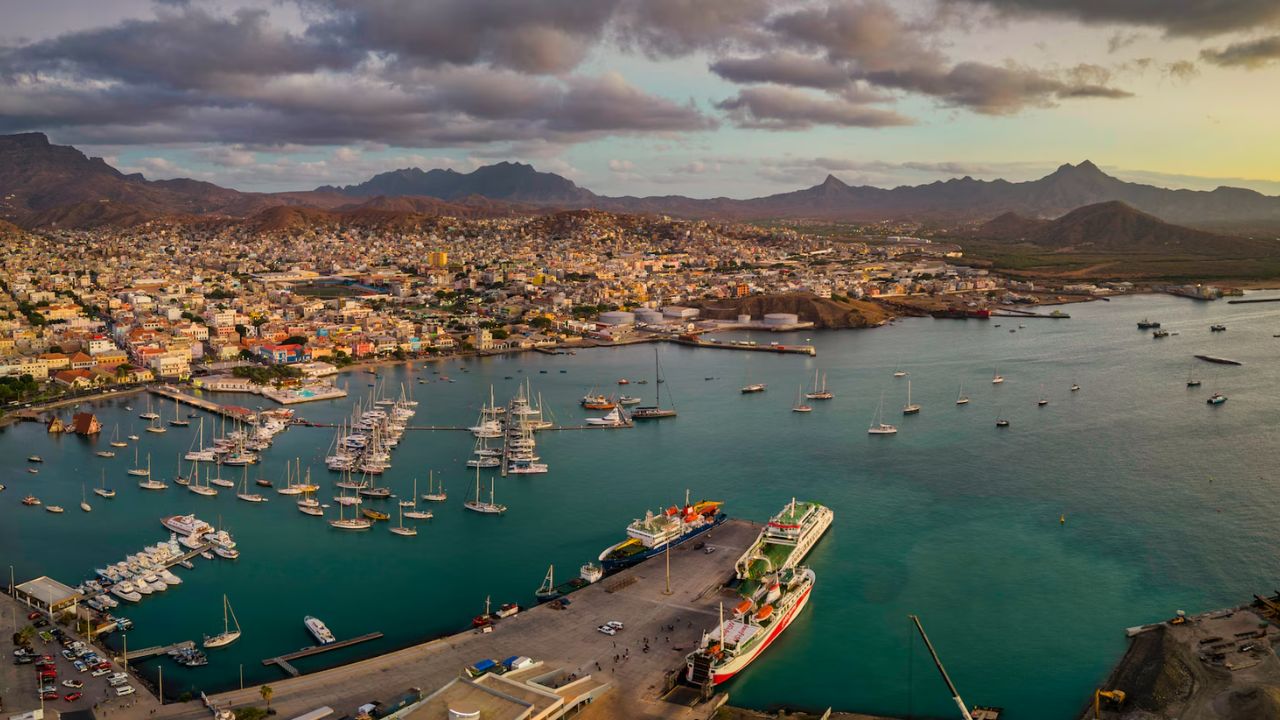
Cape Verde played a quiet but critical role in shaping early Atlantic navigation. Long before modern shipping lanes and global trade networks existed, this island group helped European sailors understand winds, currents, and long-distance sea travel. Its location off the West African coast made it a natural staging point during the age of exploration and permanently linked the islands to Atlantic maritime history.
Geographic Position and Strategic Importance
Cape Verde sits at the crossroads of the eastern Atlantic, roughly midway between Europe, West Africa, and the Americas. For early navigators sailing from Portugal and Spain, the islands offered a rare combination of open harbors, fresh supplies, and predictable wind patterns.
Table of Contents
This position allowed ships to pause, resupply, repair damage, and prepare for long ocean crossings. In an era when voyages depended on sail power and celestial navigation, having a reliable stopping point was often the difference between success and disaster.
Discovery and Early Portuguese Settlement
Portuguese sailors reached the uninhabited islands in the mid-15th century. Unlike many Atlantic territories, Cape Verde had no indigenous population, allowing the Portuguese Crown to establish settlements quickly and organize the islands as a controlled maritime base.
Early towns grew around natural harbors, especially on Santiago Island. These settlements were not only colonial outposts but also operational centers where navigators exchanged knowledge about routes, weather, and sea conditions. Over time, Cape Verde became deeply embedded in Portuguese maritime strategy.
Training Ground for Ocean Navigation
One of Cape Verde’s most important contributions was its role as a testing and learning environment for long-distance navigation. Sailors used the islands to study Atlantic trade winds, particularly the northeast trade winds that dominate the region.
By sailing to Cape Verde and then turning west, navigators learned how to use wind systems efficiently rather than fighting against them. This knowledge later became central to transatlantic crossings to the Americas and return routes back to Europe.
Role in the Volta do Mar System
Cape Verde was closely tied to the development of the “Volta do Mar,” a navigation technique that involved sailing away from land to catch favorable winds and currents. Instead of hugging coastlines, ships learned to loop into the open Atlantic before heading toward their destination.
The islands helped sailors understand how wind patterns changed with latitude. These lessons reduced travel time, improved safety, and allowed for more predictable trade routes. Without places like Cape Verde, this navigation system would have been far riskier to develop.
A Hub in Early Atlantic Trade Networks
As Atlantic navigation improved, Cape Verde became a central waypoint in early trade routes connecting Europe, Africa, and the Americas. Ships carrying goods, people, and information passed through its ports regularly.
This traffic transformed the islands into a logistical hub where crews rested and ships were refitted. The constant movement of vessels also spread navigational knowledge quickly, reinforcing Cape Verde’s importance as a maritime crossroads rather than a distant colony.
Connection to the Transatlantic Slave Trade
Cape Verde’s navigation role cannot be separated from the darker side of Atlantic history. Its ports became involved in the transatlantic slave trade, serving as holding points and redistribution centers.
While this involvement brought economic activity, it also left a lasting social and cultural impact. The movement of ships, forced migrants, and goods tied the islands deeply into Atlantic systems that shaped global history, migration patterns, and cultural exchange.
Influence on Later Exploration and Mapping
The experiences gathered in Cape Verde influenced later European exploration. Sailors who mastered Atlantic routes using the islands as reference points went on to explore the Caribbean, South America, and beyond.
Cartographers also benefited from repeated voyages through the region. Improved maps, star charts, and sea logs were often based on routes tested around Cape Verde, contributing to safer and more accurate navigation across the Atlantic.
Lasting Maritime Legacy
Although modern ships no longer depend on wind and currents in the same way, Cape Verde’s early role in Atlantic navigation remains significant. The islands helped transform ocean travel from risky coastal hopping into planned, open-sea journeys.
Today, this maritime legacy is reflected in Cape Verde’s culture, port cities, and historical sites. Understanding the islands’ role in early Atlantic navigation offers insight into how global connections were formed—and how a small archipelago helped reshape the movement of people, ideas, and commerce across the ocean.

Marta Silva is a travel writer and certified island guide with over twelve years leading small-group tours across Cape Verde. Based in Praia, Cape Verde, her professional background combines on-the-ground guiding, itinerary planning, and hospitality consulting. Her expertise includes island itineraries, public transport logistics, sustainable travel tips, and local culture immersion. Marta authored the practical guidebook “Discovering Santiago” and contributes island guides for regional tourism publications; she has partnered with Cape Verde’s tourism board on community-based tourism initiatives and regular travel-workshops for visiting journalists.